


Suppliers
Add your company
Austars Model
Advanced VTOL & Fixed-Wing UAVs | State-Of-The-Art Technologies for Unmanned & Autonomous Aircraft

Platinum Partner


Tamilan
Quadcopter Airframes and Complete Drone Solutions for Civilian, Commercial, and Military Applications

Gold Partner

Hirth Engines
Cutting-Edge Two-Stroke Gasoline & Heavy Fuel Engines for Unmanned Aerial Vehicles

Gold Partner


INF Inject
Advanced EFI Drone Propulsion Solutions for Commercial & Industrial UAV Platforms

Gold Partner

TEI – TUSAŞ Engine Industries
UAV Engines & Component Manufacturing for Commercial & Military UAVs

Silver Partner


Showcase your capabilities
If you design, build or supply 2-Stroke UAV Engines, create a profile to showcase your capabilities on this page
Products

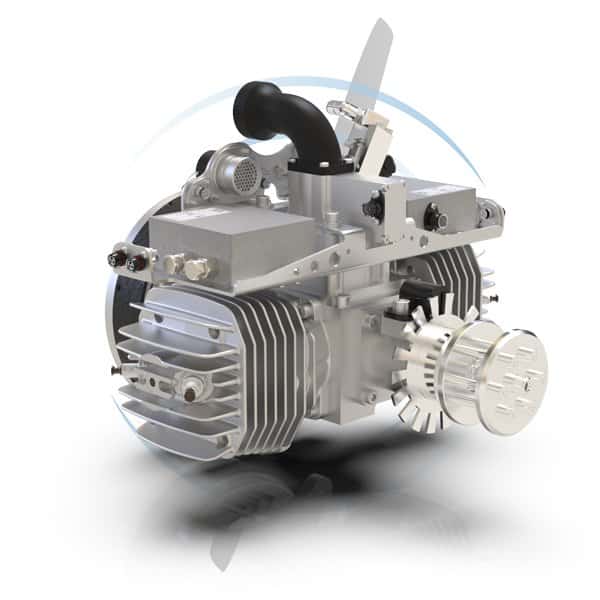
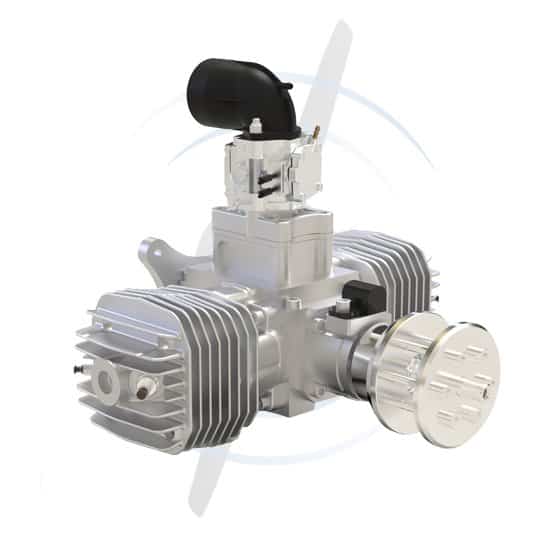
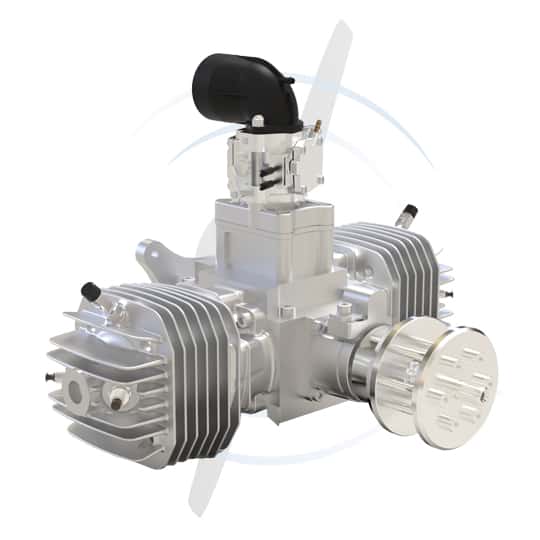


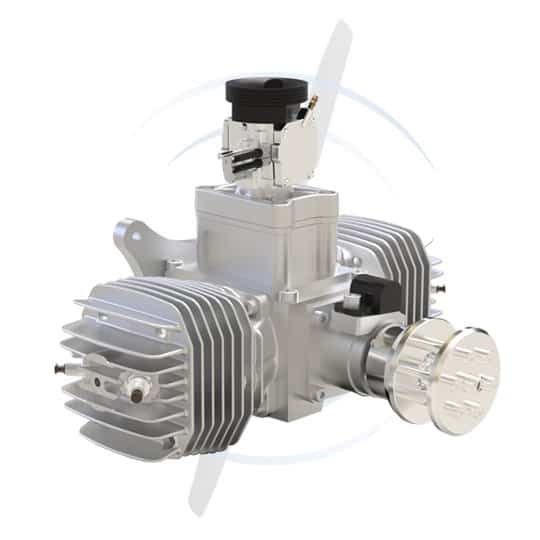
2-Stroke UAV Engines

Two-stroke engines are designed so that a complete power cycle requires two movements of the piston (one up and one down) while the engine’s crankshaft completes one revolution.

SP-55 FI TS ROS 2-Stroke Fuel Injected UAV Engine by Sky Power International
As they are smaller and lighter than four-stroke engines, 2-stroke engines are a common choice for UAV (unmanned aerial vehicle) propulsion. The high power-to-weight ratio provides the aircraft with a higher payload capacity.
2-stroke UAV engines also have fewer moving parts, and are thus easier and cheaper to manufacture and less complicated to maintain. They are however less fuel-efficient, producing greater levels of emissions as well as noise and vibration. Unlike 4-stroke engines, they do not have separate lubrication systems, and so engine oil must be pre-mixed into the fuel.
2-stroke drone engines may utilize fuel injection or a carburettor. In a carburettor, fuel is vaporized and mixed with air before being delivered to the engine cylinders. The engine’s throttle can open or close to vary the air intake and thus the fuel-air ratio.
Fuel Injected 2-Stroke Engines

B2G120 2-Stroke UAV EFI Engine by Austars Model
With fuel injection, fuel is sprayed in close to the cylinder head, and is vaporized and mixed with air just before entering the cylinder.
Fuel injected two-stroke engines are harder to start, but are much more efficient, as the fuel-air mixture can be more precisely controlled. This is especially true of electronic fuel injection (EFI) engines, which use sensors to monitor engine conditions and adjust the fuel-to-air ratio accordingly.
Fuel Types
Two-stroke UAV engines may run on gasoline, methanol, or heavy fuels such as Jet A, Jet A1, JP-5 and JP-8. Heavy fuel engines are highly useful in military and maritime applications, where these fuels are commonly used to power other systems and thus sourcing an extra type of fuel is not required.


