
Suppliers
Add your company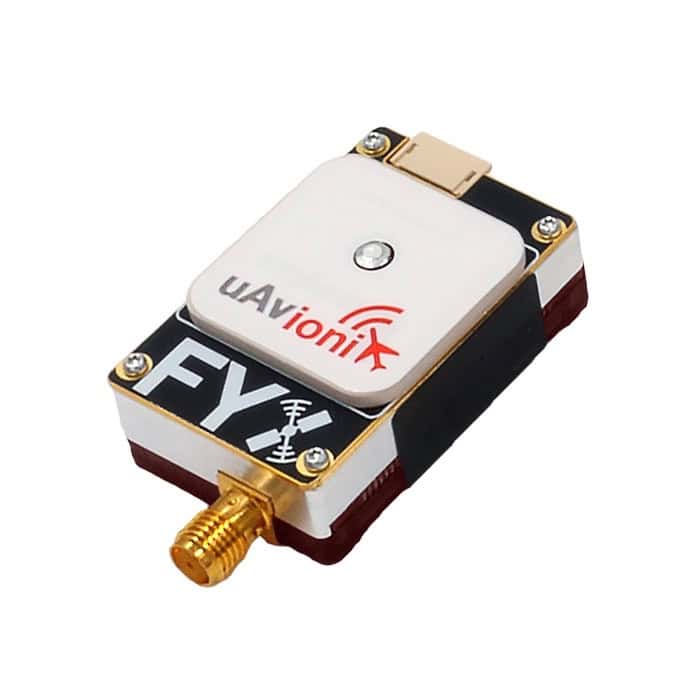
uAvionix Corporation
Certified UAV Communications, Navigation, Control, Surveillance, and Combat ID Solutions

Gold Partner

Sunhillo Corporation
Radar & ADS-B Surveillance Data Fusion, Integration & Display | UAV Tracking & ATC Integration

Silver Partner

Aerobits
Miniature ADS-B Technology (Transceivers/Receivers) and Drone Tracking Transponders for sUAS & UTM/U-Space

Silver Partner
Showcase your capabilities
If you design, build or supply ADS-B Receivers, create a profile to showcase your capabilities on this page
Products


ADS-B Receivers for Unmanned Aerial Systems and Drone Operations

Automatic Dependent Surveillance–Broadcast (ADS-B) receivers are at the core of modern air traffic surveillance systems, enabling aircraft, including drones and unmanned aerial vehicles (UAVs), to both broadcast and receive precise location data in real-time. These receivers are integral for unmanned platforms operating beyond visual line of sight (BVLOS), in congested airspace, or near crewed aviation traffic. In unmanned aviation, the adoption of ADS-B technology supports critical objectives in flight safety, fleet coordination, airspace monitoring, and mission planning.
Understanding ADS-B Receivers
ADS-B technology relies on GPS or GNSS positioning to periodically broadcast an aircraft’s position, velocity, altitude, and identification information. While ADS-B transponders actively transmit this data, ADS-B receivers passively capture these signals, enabling other aircraft, ground stations, and control systems to gain awareness of nearby aerial traffic.

Margate II ADS-B Receiver by Sunhillo Corporation.
In the context of unmanned systems, an ADS-B receiver typically integrates with a UAV’s flight control system or autopilot, enabling the onboard avionics or ground-based systems to receive surveillance data from surrounding aircraft. These receivers are particularly critical for drones without onboard ADS-B Out capabilities, as they provide passive awareness of nearby manned and unmanned traffic, improving situational awareness and collision avoidance.
Use in Commercial Drone Applications
In commercial drone operations, ADS-B receivers are becoming increasingly standard. They are used to enhance aviation safety and regulatory compliance, particularly in beyond visual line of sight (BVLOS) and urban air mobility (UAM) missions. Surveying, inspection, agriculture, and delivery operations all benefit from the real-time tracking data provided by ADS-B receivers. These systems allow drones to monitor manned aircraft in their vicinity and take automated evasive action via their flight controllers or electronic flight instrument systems (EFIS) when needed.
Commercial operators may also use ADS-B data for fleet monitoring, navigation optimization, and airspace compliance. Combined with telemetry receivers and multifunction displays, ADS-B receivers form part of a larger avionics suite that enables more sophisticated drone operations.
Industrial Uses and Infrastructure Integration
Industrial drone applications, such as oil and gas pipeline monitoring, power line inspection, and infrastructure surveys, often involve flights over complex, obstacle-rich terrain. In these environments, ADS-B receivers allow drones to detect nearby aircraft and avoid high-risk airspace zones.
These receivers also integrate into industrial base stations or mobile ground control units, providing a centralized view of airspace for multiple UAVs operating in the field. The ability to aggregate and visualize aircraft identification data in real time facilitates more efficient route planning and mission control. Through telemetry systems and ground-based software-defined radios (SDRs), operators can optimize workflows and ensure that UAS fleets operate safely within controlled and uncontrolled airspace.
ADS-B in Military Drone Operations
Military drones operate in dynamic, often contested environments where airspace deconfliction and rapid situational awareness are paramount. In these contexts, ADS-B receivers support secure identification of allied or neutral aircraft and contribute to air traffic control (ATC) automation in joint operations involving both manned and unmanned platforms.
Military-grade ADS-B receivers are often integrated into advanced flight computers and avionics systems, combining multiple inputs from navigation systems, radar systems, and electronic warfare sensors to provide comprehensive situational awareness. These receivers also contribute to tactical UTM, particularly when managing drone swarms or coordinating missions across restricted airspace. Some platforms feature dual-use ADS-B and Mode S transponders to ensure compliance with both military and civil air traffic systems.

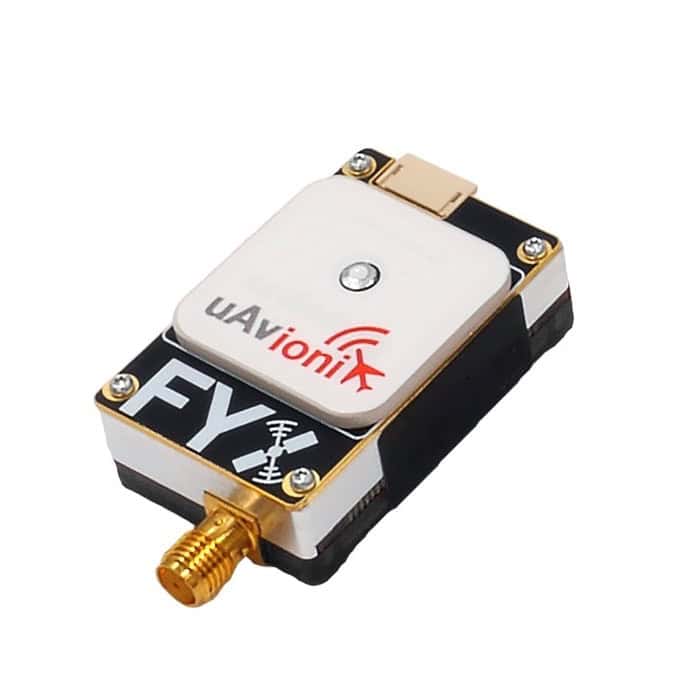
ADS-B Ground-Based Receiver by uAvionix Corporation
The Role of ADS-B in Unmanned Traffic Management (UTM)
Unmanned traffic management is a framework that allows for safe and efficient low-altitude drone operations within shared airspace. A cornerstone of UTM systems is real-time surveillance and tracking, which ADS-B receivers support by collecting and forwarding data on cooperative aircraft within range.
In this role, ADS-B receivers can be mounted on UAVs or deployed as part of terrestrial ADS-B ground stations. These ground-based receivers aggregate ADS-B data and distribute it to UTM service providers, enabling real-time traffic visualization, route optimization, and airspace management. For example, drone tracking systems can use receiver modules to track all aircraft in a given area, feeding this information into UTM interfaces for predictive traffic planning and collision avoidance.
Because not all drones are equipped with ADS-B Out, passive ADS-B In receivers allow for compliance without actively broadcasting drone positions, which is especially important for privacy-sensitive or tactical missions.
Regulatory Considerations for Drone ADS-B Receivers
Regulatory bodies around the world, including the FAA (United States), EASA (Europe), and CAAC (China), are increasingly mandating the use of surveillance and identification technologies for the integration of UAS into controlled airspace. While the FAA’s Remote ID rule does not mandate ADS-B Out for drones (to avoid overloading the air traffic system), it encourages the use of ADS-B In for enhanced situational awareness.
In many jurisdictions, integrating ADS-B receivers with compliant avionics or flight control systems can be a critical step toward gaining Beyond Visual Line of Sight (BVLOS) operation waivers or authorization to fly near airports and other sensitive airspaces. Operators should ensure their systems align with ICAO standards and national UTM frameworks, which often incorporate ADS-B data into centralized flight planning and airspace coordination tools.
Military and industrial users operating in restricted or proprietary airspaces may face different requirements, but many adopt ADS-B receivers to meet internal safety and interoperability standards, particularly during joint operations or when operating near civil traffic corridors.
Integration With Other Avionics Systems
Modern ADS-B receivers for drones are increasingly modular and interoperable. They integrate seamlessly with autopilots, flight controllers, and navigation systems, allowing for automatic maneuvering and responsive safety protocols. In some systems, data from ADS-B receivers is fed directly into multifunction displays or electronic flight instrument systems (EFIS), providing operators with a cockpit-like interface.
Many solutions now combine ADS-B with other surveillance technologies such as FLARM, radar systems, or drone-specific telemetry receivers. These systems often incorporate SDR technology, enabling software-defined radios to adapt to evolving communication protocols and frequency standards.
Related Technologies
Software-defined radios (SDR) – Flexible communication platforms where signal processing is done via software, allowing drones to handle multiple RF protocols, including ADS-B, telemetry, and LTE.
GNSS receivers and modules – Provide accurate geolocation and timing, enabling the generation of ADS-B signals and precise drone navigation.
Autopilots and flight control systems – Manage drone stability and navigation, using ADS-B inputs to autonomously avoid conflicts and reroute as needed.
Electronic flight instrument systems (EFIS) – Display key avionics data such as ADS-B traffic and GPS positioning in real time for UAV operators or onboard systems.
Mode S transponders – Respond to radar by transmitting an aircraft’s unique identification, altitude, and position. Required in controlled airspace for manned aircraft, and some models also support ADS-B Out to enable real-time broadcast of GPS-derived location data.
Telemetry receivers and communication modules – Transmit and receive data between UAVs and ground stations, including telemetry, command, and surveillance signals.
FLARM and radar-based collision avoidance systems – Complement ADS-B by detecting aircraft using alternative systems or sensing non-cooperative targets.
Real-time kinematic (RTK) positioning – Delivers centimeter-level positional accuracy, enhancing ADS-B broadcast precision and geofencing accuracy.
Unmanned traffic management (UTM) systems – Use ADS-B data to coordinate drone flights in shared airspace, promoting safe and efficient operations.
ADS-B: Empowering Drones
As UAS platforms proliferate across commercial, industrial, and defense sectors, the need for real-time situational awareness and airspace coordination becomes increasingly critical. These receivers empower drones to detect and avoid other aircraft, navigate complex environments, and integrate into broader unmanned traffic management ecosystems.
Whether mounted onboard or deployed as part of a ground station, ADS-B receivers are foundational components of any robust drone avionics architecture. By enabling responsive flight control, fleet monitoring, and enhanced airspace safety, they support the safe and scalable expansion of unmanned operations in the national airspace and beyond.


