


Suppliers
Add your company
DTC Codan
Software Defined Radios (SDRs) and IP Mesh Radios for UAV, Drones, UGVs and Robotics

Platinum Partner

Austars Model
Advanced VTOL & Fixed-Wing UAVs | State-Of-The-Art Technologies for Unmanned & Autonomous Aircraft

Platinum Partner

Honeywell Aerospace
BVLOS Solutions for UAS & UAM: Fuel Cells, Radar, Navigation Sensors, Flight Control & SATCOM

Platinum Partner

UXV Technologies
Pioneering Ground Control Stations (GCS), Gimbals & Tactical Solutions for Unmanned Systems & Defense Robotics

Platinum Partner

SKYTRAC
UAV, UAS, and UAM Satellite Communications – BVLOS and C2 Satcom Terminals and Mission Servers

Platinum Partner

Triad RF Systems
Integrated Radio Systems, RF Power Amplifiers, Bi-Directional Amplifiers & Consultancy Services for UAV & Unmanned Systems

Platinum Partner

TUALCOM
Anti-Jam GPS-GNSS Devices, Tactical Data Links, Telemetry Systems, Electronic Warfare Equipment & Flight Termination Systems

Gold Partner

Beechat Network Systems
Mesh Networking & Secure C2 Backbone for UAVs & Autonomous Systems

Gold Partner

Gotonomi
Miniaturized UAV Satcom & Cellular Connectivity Solutions Enabling BVLOS Operations

Gold Partner

Persistent Systems
Wave Relay® MANET Technology: Ultra-Reliable Mobile Networking for Unmanned Systems

Gold Partner

Taisync Technology
Wireless Datalink Solutions for Unmanned Vehicles & Robotic Platforms

Gold Partner

allocortech, inc.
Custom & COTS Hardware & Software Solutions for Next-Generation Vehicle Systems

Gold Partner

Videosoft Global
Ultra-Low-Bandwidth Real-Time Video Streaming Solutions for UAVs, Unmanned & Robotic Systems

Gold Partner

Viasat, Inc.
Secure Network Connectivity Solutions & IFF Mode 5 Encryptor Devices for Military & Government UAVs & Unmanned Systems

Gold Partner

Ground Control
Satellite Communications (SATCOM) & Cellular-Based IoT Solutions for Drones & Robotics

Gold Partner

Iridium Communications
Maritime Satellite Communications & Connectivity - SATCOM Terminals and Antennas

Gold Partner

uAvionix Corporation
Certified UAV Communications, Navigation, Control, Surveillance, and Combat ID Solutions

Gold Partner

Meteksan Defense
UAV Components: SAR, Radar Altimeter, Data Links, Telemetry, GNSS Products & C-UAS | Tactical USVs

Gold Partner


Doodle Labs
Mesh Radio, WiFi Transceivers & Wireless Mesh Network Technology for Drones, UAVs, UGVs & Robotics

Gold Partner

Sagetech Avionics
Certifiable Situational Awareness & BVLOS Solutions for Uncrewed Aircraft Systems in the Defense & Civil Industries

Gold Partner

Eroot Electronics
Professional UAV Components & Sensors: Drone Flight Controllers, GNSS Modules, Telemetry Solutions

Silver Partner

Meshmerize
Innovative Wireless Mesh Networking Technology: Ultra-Reliable & Low-Latency Connectivity for Drones & Mobile Robotics

Silver Partner

Steatite
Ultra-Reliable Rugged Hardware Solutions for Mission-Critical UAVs & Unmanned Systems Operating in Extreme Environments

Silver Partner

Packet Digital
High-Performance Drone Batteries, Power Management Systems, Fleet Management Software, Solar MPPT Integration, Celular C2 & Payload Communications

Silver Partner

Alpha Unmanned Systems
Helicopter UAVs: Rotary Wing Drones for Maritime, Naval & Security Operations | UAS GCS

Silver Partner


VB Antennas
RF & Microwave Antennas for Drones & GCS | Surveillance & Communication Antennas

Silver Partner

Simpulse
SDR Technology, UAV Data Links & Tracking Antennas for Long-Range Communications

Silver Partner

Sunhillo Corporation
Radar & ADS-B Surveillance Data Fusion, Integration & Display | UAV Tracking & ATC Integration

Silver Partner

Radionor Communications AS
Wireless Radio Communications, Tactical Data Links & Radio Transceivers for Unmanned Systems

Silver Partner

Aerobits
Miniature ADS-B Technology (Transceivers/Receivers) and Drone Tracking Transponders for sUAS & UTM/U-Space

Silver Partner
Showcase your capabilities
If you design, build or supply Drone Communications, create a profile to showcase your capabilities on this page
Products


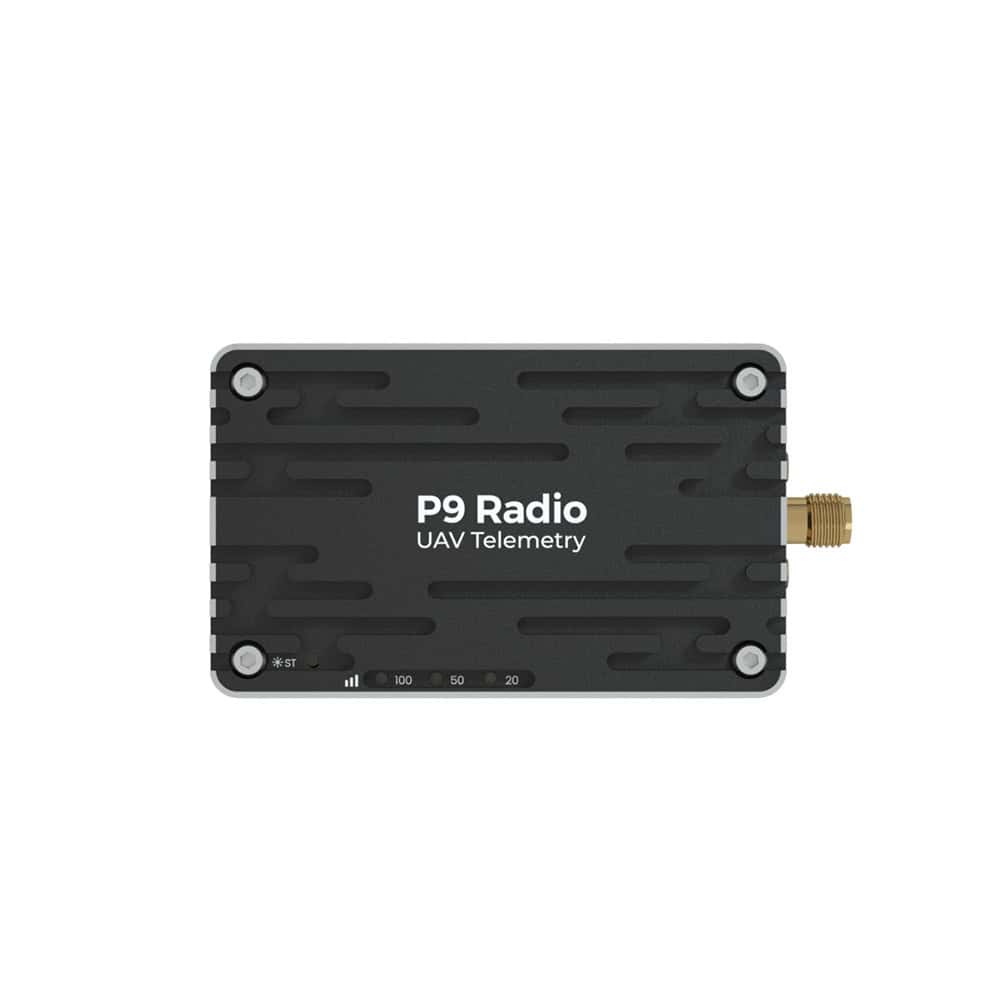


UAV & Drone Communication Systems

Drone communications refer to the systems and technologies that enable unmanned aerial vehicles (UAVs) to exchange data with operators, ground stations, and other aircraft. These communication links are essential for transmitting command and control (C2) instructions, collecting telemetry data, and streaming payload information such as video, images, or sensor readings. Without reliable communications, a drone cannot be safely or effectively operated, particularly during complex missions like beyond visual line of sight (BVLOS) flights or autonomous operations in contested environments.
Typically, drone communication systems utilize various mediums, including radio frequency (RF), satellite links, cellular networks, and tethered connections, to ensure connectivity over different distances and terrains. These systems may include VHF/UHF radios for short-range line-of-sight operations, satellite communications (SATCOM) for global coverage, and 5G modems for low-latency data transmission in urban settings. Advanced setups may also include encrypted channels for secure data exchange, mesh networks for swarming drones, and relay UAVs that act as airborne communication nodes to extend range and maintain link integrity in obstructed or remote areas.
Foundations of UAV Communication Systems
Drone communication encompasses both control and data exchange:
- Command and control (C2) links: Ensure stable remote piloting and transmission of mission-critical data such as position, heading, and battery status.
- Telemetry systems: Deliver live feedback on the drone’s operational health and environmental metrics.
- Payload/data links: Support high-bandwidth streaming, including HD video, multispectral imaging, and sensor fusion data.
- Relay and mesh networking: Allow drones to act as airborne infrastructure, extending communication range and maintaining connectivity in dynamic missions.
Together, these systems ensure that UAVs remain responsive, accountable, and connected, regardless of the mission’s distance or complexity.
The Role of UAVs as Communication Relays

VersaWave UAV SATCOM Solution by Honeywell
One of the most transformative developments in UAV communication is the use of drones as aerial communication relays, particularly in beyond visual line of sight (BVLOS) scenarios. When terrain, infrastructure, or distance prevent direct line-of-sight communication between a ground control station and an operational UAV, relay drones can fill the gap.
Use cases:
- Military and defense: In tactical operations, relay drones maintain secure command links with forward-operating UAVs, which gather intelligence or engage targets.
- Disaster response: During hurricanes or earthquakes, drones deployed as temporary communication towers relay signals between remote UAVs and ground teams.
- Pipeline and border monitoring: Relay-capable UAVs ensure uninterrupted telemetry and command and control (C2) links across rugged or forested terrain. This strategy is especially effective when used with mesh network radios, allowing UAVs to form autonomous, reconfigurable networks that adapt in real-time.
Types of Drone Communication Technologies
VHF/UHF Radio Systems
VHF and UHF radios form the backbone of traditional UAV communication, especially for short- to mid-range missions under LOS conditions. These bands offer reliable telemetry and control in less crowded radio environments.

Swappable Radio Modules (SRM) by UXV Technologies
Applications:
- Search and rescue: VHF radios transmit GPS locations and survivor status.
- Environmental monitoring: UHF radios ensure steady data links in remote wildlife preserves.
Software-Defined Radio (SDR)
Software-defined radio offers dynamic, adaptable communication by using software to define signal protocols. They’re vital in multi-band, multi-role UAVs, allowing for real-time frequency hopping and waveform adaptation.
Applications:
- Electronic warfare: SDRs evade jamming in conflict zones.
- Signals intelligence (SIGINT): Drones capture and decode adversary transmissions on the fly.
Satellite Communication (SATCOM)
SATCOM enables high-latency, yet globally accessible, communication channels, which are vital for missions spanning vast distances or lacking ground infrastructure.
Applications:
- Maritime patrol: UAVs operate far from land using LEO or GEO satellite links.
- Disaster zone assessment: SATCOM allows drones to stream video and telemetry when ground networks are down.
Cellular (4G/5G) Communication
5G and LTE modems embedded in drones tap into terrestrial cellular networks, offering low-latency, high-bandwidth connections for dense urban operations or infrastructure inspection.
Applications:
- Urban air mobility: Passenger drones and deliveries require ultra-reliable 5G links.
- Traffic and crowd monitoring: Real-time video feeds are delivered via mobile networks.
Mesh Network Radios
Mesh networking distributes communication across multiple unmanned aerial vehicles (UAVs). Each acts as a node that routes data for others, improving redundancy and expanding reach.
Applications:
- Swarming drones: Coordination in military or agricultural missions.
- Disaster area mapping: Aerial drones operate autonomously without centralized control.
Tethered Drone Systems
Hard-wired via fiber or copper cable, tethered UAVs receive uninterrupted power and data connectivity, ideal for continuous monitoring tasks.
Applications:
- Perimeter security: Tethered drones provide 24/7 surveillance with encrypted backhaul.
- Live broadcasting: Ensures power and bandwidth for prolonged video transmission.
Encrypted and Secure Communications
Cybersecurity is critical, especially for defense, border enforcement, and protection against industrial espionage. Encrypted C2 and data links safeguard UAV operations.
Applications:
- Law enforcement surveillance: Prevents interception of location and imagery.
- Military missions: Encrypts drone-to-ground and drone-to-drone transmissions.
ADS-B and Mode-S Transponders
ADS-B and Mode-S transponders provide aircraft position broadcasting and situational awareness, required for safe integration into shared airspace.
Applications:
- Civil airspace compliance: ADS-B Out informs nearby aircraft of the UAV’s location.
- BVLOS operations: ADS-B In helps UAVs avoid collisions with manned aircraft.
Mode 5 IFF for military UAV operations
Mode 5 Identification Friend or Foe (IFF) is a critical capability for UAVs operating in defense environments. This encrypted transponder system ensures that drones can be securely identified as friendly by allied forces, minimizing the risk of fratricide and improving interoperability in joint-force missions.
Applications:
- Tactical reconnaissance: UAVs equipped with Mode 5 IFF can safely conduct ISR missions in contested airspace, transmitting secure positional data to allied aircraft and command centers.
- Manned-unmanned teaming (MUM-T): During joint operations, Mode 5 allows drones to operate seamlessly alongside manned platforms, ensuring they are recognized and coordinated as part of a shared operational picture.
- Combat support missions: UAVs delivering real-time intelligence or providing targeting assistance benefit fromMode 5’s authentication layer, preventing misidentification in high-stakes environments.
As defense operations increasingly rely on autonomous systems, Mode 5 IFF serves as a vital bridge between legacy systems and next-generation drone capabilities.
Operational Environments & Tailored Communications
Each drone mission demands a specific communication strategy:
- Long-range reconnaissance: SATCOM and relay drones ensure connectivity in uninhabited zones.
- Urban ISR (Intelligence, Surveillance, Reconnaissance): SDRs and 5G systems provide real-time streaming in cluttered spectrum environments.
- Emergency and disaster zones: Mesh networks and tethered drones fill communication voids left by damaged infrastructure.
- Commercial and industrial inspections: Cellular modems and encrypted Wi-Fi modules enable real-time connectivity between UAVs and enterprise cloud services.
- Swarm operations and MUM-T (Manned-Unmanned Teaming): Mesh-enabled drones collaborate with manned vehicles for synchronized missions.
Trends in Drone Communication Systems
The evolution of UAV communication is shaped by both technology and regulatory pressure:
- LEO satellite integration: Low Earth Orbit constellations offer lower latency and higher throughput SATCOM.
- AI-assisted spectrum management: Drones autonomously switch channels and protocols to avoid interference.
- Hybrid architecture: Simultaneous use of RF, 5G, and SATCOM ensures redundancy.
- Cybersecurity protocols: End-to-end encryption and anti-spoofing tools protect drones from hijacking.
- Communication relays and swarm intelligence: Drones increasingly function as infrastructure for BVLOS operations and battlefield networking.
These innovations ensure UAVs remain connected and effective across longer distances and in more challenging environments.
Ensuring Mission Success
From VHF radios to advanced SATCOM relays and AI-managed mesh networks, drone communication technologies enable precise control, real-time awareness, and scalable autonomy. As operational needs continue to shift toward Beyond Visual Line of Sight (BVLOS) missions and autonomous swarms, communication systems will play an increasingly significant role in shaping both capability and compliance.
Whether enabling strategic reconnaissance, life-saving disaster responses, or efficient agricultural monitoring, reliable UAV communication ensures mission success from start to finish.


