
Suppliers
Add your company
T-MOTOR
Cutting-Edge Propulsion Systems for UAVs: Drone Motors, ESCs, and Propellers

Platinum Partner

Triad RF Systems
Integrated Radio Systems, RF Power Amplifiers, Bi-Directional Amplifiers & Consultancy Services for UAV & Unmanned Systems

Platinum Partner

NovAtel
Precise Positioning for Unmanned Vehicles: GPS & GNSS Receivers, Antennas & Inertial Systems

Platinum Partner

Extreme Engineering Solutions, Inc
Rugged Embedded Computing, Single Board Computers, Processing Modules & Embedded Devices

Platinum Partner
TUALCOM
Anti-Jam GPS-GNSS Devices, Tactical Data Links, Telemetry Systems, Electronic Warfare Equipment & Flight Termination Systems

Gold Partner

Kollmorgen
Cutting-Edge Precision Motor & Motion Solutions for Unmanned Aerial Vehicles

Gold Partner

Vector Technics
Unified Propulsion Systems for Mission-Critical, High-Reliability UAV Platforms

Gold Partner

allocortech, inc.
Custom & COTS Hardware & Software Solutions for Next-Generation Vehicle Systems

Gold Partner
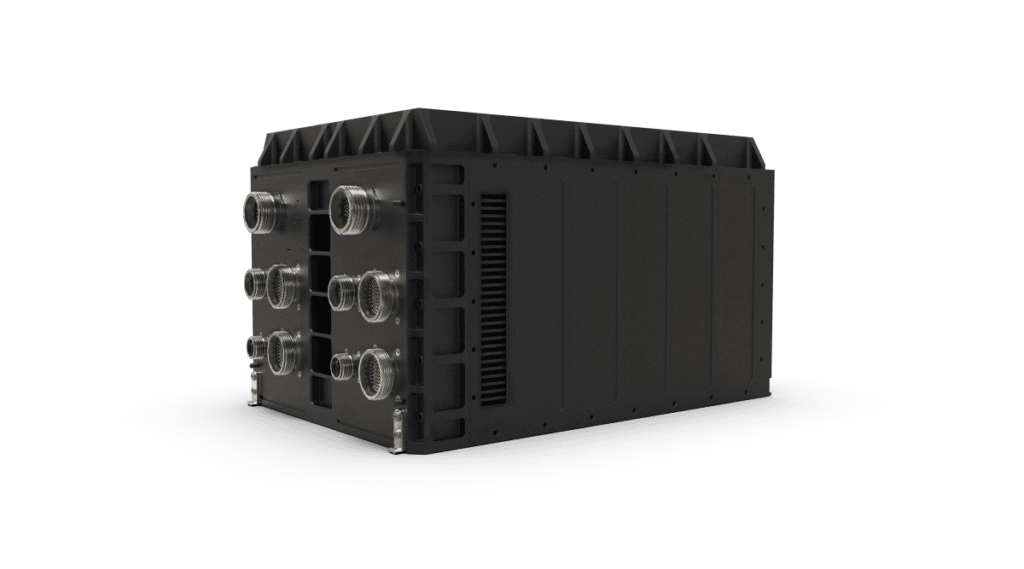
LCR Embedded Systems
Mission-Critical Integrated Systems, Chassis & Backplanes for UAVs, UGVs & Unmanned Systems

Gold Partner

Hargrave Technologies
Drone Motor Controllers & NDAA-Compliant Drone ESCs for Brushless Electric Motor Control

Gold Partner

visionair
Power Management Systems, Power Distribution Units, Generator Control Units, Engine Starters & Battery Balancers/Monitors

Gold Partner

Plettenberg
High Performance Electric Motors, ESCs, Generators & Starters for Unmanned Systems

Gold Partner

Embention
UAV Autopilot Flight Controllers, Ground Stations, ESC Controllers & Tracking Antennas

Gold Partner

EMCORE Corporation
High Performance FOG, RLG, and Quartz MEMS Inertial Sensors - Gyros, IRU, IMU, INS

Gold Partner

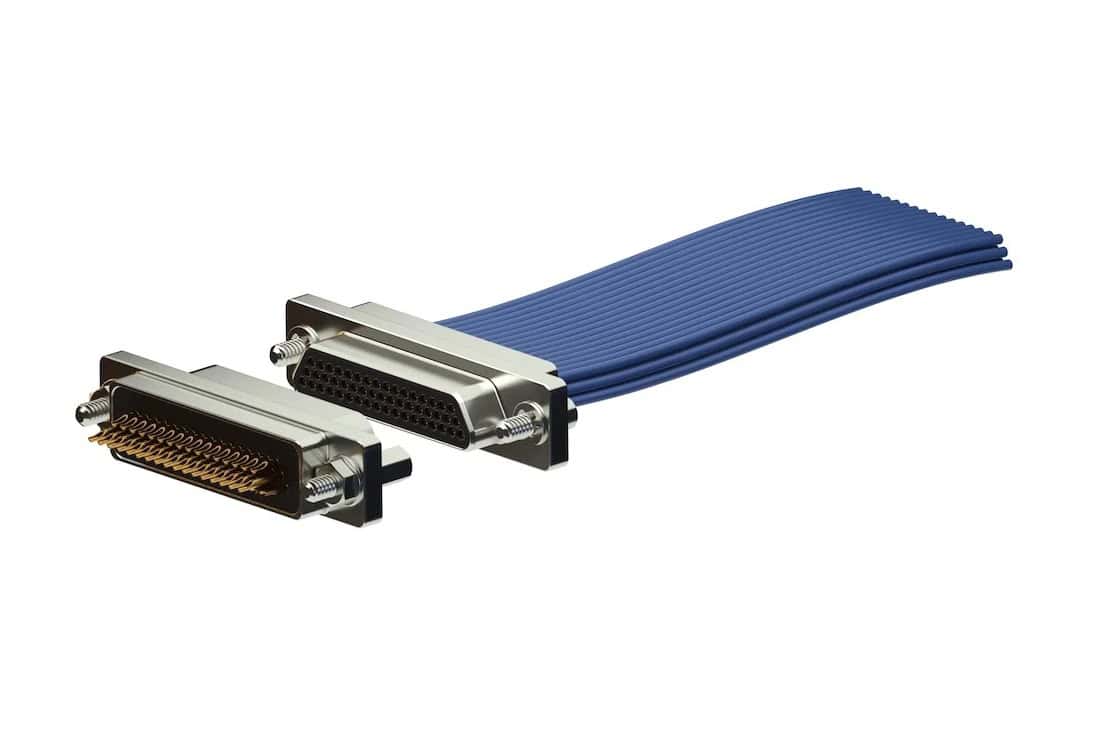
NICOMATIC
Micro Connectors for Aerospace, UAVs & Robotics - Rugged, Modular, High-Performance

Gold Partner

Omnetics Connector Corporation
Micro and Nano Miniature Connectors for Unmanned Systems

Gold Partner

Review Display Systems
High-Performance Rugged Displays & Custom HMI Solutions for Mission-Critical Unmanned Systems

Silver Partner

E-Magy
High-Energy Density Lithium Ion Batteries for Drones & Unmanned Systems | Nanoporous Silicon Anode Technology

Silver Partner


Offshore Electronics
Contract Electronics Manufacturing (CEM Services) for Unmanned Systems, UAVs & Robotics

Silver Partner

ARK Electronics
Cutting-Edge Flight Controllers, Sensors, and Other Electronics Technologies for Drones & Robotics

Silver Partner

MAD Components
Power & Propulsion Solutions for UAVs: Drone Motors, ESCs, Batteries & Propellers

Silver Partner


Moscat Ingenieria
Electronic Engine Control Units (ECU) & Management Systems for EFI Engines + Engineering Development Services

Silver Partner

San Francisco Circuits
PCB Fabrication & Assembly; RF, Military Grade, Flex, & Metal Core PCB Capabilities for Unmanned Systems

Silver Partner
Showcase your capabilities
If you design, build or supply Electronic Components, create a profile to showcase your capabilities on this page
Products


Electronic Components for UAVs and Unmanned Systems

Electronic components enable unmanned systems in all domains to carry out a wide range of processes that are essential to their functioning, including sensing, processing, communication, and actuation. For integrators and platform designers, component-level decisions regarding drone hardware affect system reliability, endurance, survivability, and lifecycle cost.
Performance, Reliability, and System-Level Impact

Inertial, Environmental & Position Sensors from AvioRace
In unmanned systems, electronic part selection must be considered in the context of system-level consequences. A marginally unstable power converter can introduce noise into RF subsystems. An inadequately shielded oscillator can degrade GNSS accuracy. Thermal limitations at the silicon level can restrict overall endurance.
Professional engineering and design practice requires quantitative evaluation of a wide range of factors, including:
- Mean Time Between Failures (MTBF): Essential for mission planning and fleet maintenance.
- Derating Margins: Ensuring electrical components operate well within their voltage and current limits.
- Thermal Headroom: Maintaining performance across various mission profiles and ambient temperatures.
- Shock and Vibration Tolerance: Vital for UAV and UGV electronics subject to high G-force maneuvers or rugged ground terrain.
- Electromagnetic Compatibility (EMC): Mitigating internal and external interference.
Engineering Considerations Across Air, Land, and Maritime Domains
Each operational domain imposes distinct constraints that dictate the choice of components and electronic hardware:
Airborne Systems: Require low weight, low power draw, high-altitude performance, and compliance with standards such as DO-160 for environmental qualification.
Ground Systems: Must tolerate sustained vibration, mechanical shock, and severe EMI from adjacent high-power subsystems like drive motors.
Maritime and Subsea Platforms: Require corrosion resistance, pressure tolerance, and long-duration sealing integrity for electronics parts.
The same microcontroller or power regulator may behave very differently depending on the environmental envelope. Domain-aware component engineering is therefore an essential part of the design of professional-grade systems.
Core Categories of Electronic Components
Power Management and Distribution

microDRIVE LP ESC from Hargrave Technologies
Power architecture defines platform endurance, safety, and electromagnetic stability. For drone electronics, power efficiency is the primary driver of flight time.
- DC-DC Converters: High-efficiency converters regulate bus voltages across propulsion systems, payload electronics, and avionics. In UAVs, switching frequency selection is carefully balanced against EMI emissions and efficiency. Isolation may be required for sensor integrity and fault containment.
- Power Distribution Units (PDUs): PDUs manage load prioritization, circuit protection, and fault isolation. In tactical platforms, intelligent PDUs enable remote power cycling and health reporting across subsystems.
- Battery Management Systems (BMS): BMS electronics monitor cell voltage, temperature, and charge state. They enforce balancing, prevent overcharge or deep discharge, and provide diagnostic telemetry. For lithium-based chemistries, BMS robustness is directly tied to operational safety.
- Electronic Speed Controllers (ESCs): These are critical systems that control motor speed and direction. High-performance ESCs use advanced MOSFETs and dedicated gate drivers to handle high current loads while minimizing heat.
- EMI Filters and Surge Protection: Transient suppression devices and input filtering networks protect sensitive electronics from load dumps, lightning effects, and motor-induced switching noise.
Embedded Processing & Control Electronics
Processing systems transform raw sensor input into actionable outputs, serving as the “brain” of the drone hardware.
- Microprocessors (MPUs): MPUs support higher-level autonomy stacks, operating systems, and data management functions. Multicore architectures enable separation between safety-critical and non-critical workloads.
- FPGAs and SoCs: Field-programmable gate arrays provide deterministic, parallel processing for sensor fusion, protocol handling, and high-speed I/O. System-on-Chip devices combine programmable logic and processing cores, reducing board-level complexity and improving PCB density.
- AI Accelerators and Edge Processing Modules: Dedicated neural processing hardware enables onboard image recognition, object detection, and navigation in GNSS-denied environments. Edge inference reduces latency and communication bandwidth requirements.
Analog & Mixed-Signal Components
Analog circuitry remains essential in high-performance unmanned systems, acting as the interface between the physical and digital worlds.
- ADCs and DACs: Precision conversion devices determine sensor resolution and control fidelity. Sampling rate, linearity, and noise floor are critical parameters.
- Signal Conditioning ICs: These electronic parts amplify, filter, and scale sensor outputs to usable voltage ranges, preserving signal integrity prior to digitization.
- Operational Amplifiers: Used extensively in filtering, buffering, and control loops, op-amp selection is driven by bandwidth, input offset, noise density, and temperature drift.
RF & Communications Components
UAV components used to ensure communications resilience for mission-critical operations may include:
- RF Transceivers and Front-End Modules: These define link robustness and spectral efficiency. Integration quality directly affects range and anti-jam performance.
- Power Amplifiers and LNAs: Transmit power amplifiers must balance efficiency and linearity, while low-noise amplifiers (LNAs) preserve receive sensitivity.
- Antenna Matching Networks: Proper impedance matching ensures maximum power transfer and minimizes reflected energy.
- GNSS Modules: Precision GNSS receivers support navigation and timing. Multi-constellation (GPS, GLONASS, Galileo, BeiDou) tracking and anti-spoofing and anti-jamming capabilities are essential for operation in contested environments.
Sensors & Interface Components
- IMUs and Inertial Sensors: These electronic sensors determine platform attitude and motion. Bias stability and drift characteristics directly affect navigation accuracy.
- Pressure and Environmental Sensors: Used for altitude estimation, air data systems, and environmental monitoring.
- Position Encoders: Provide actuator feedback in gimbals, control surfaces, and robotic joints.
- Interface Transceivers: Robust transceivers (CAN, RS-485, Ethernet PHY) enable reliable communication in harsh electrical environments.
Selection Criteria and Ruggedization
Environmental Performance
Electronic hardware must withstand wide temperature ranges, continuous vibration, mechanical shock, and reduced pressure at altitude. Qualification data must reflect real operational envelopes, which are more demanding than laboratory conditions.
SWaP Optimization (Size, Weight, and Power)
Unmanned platforms are inherently SWaP-constrained. Component integration density, packaging technology, and thermal efficiency directly affect payload capacity and endurance. Choosing highly integrated electronics components can reduce the footprint on PCBs, thus bringing down size and weight.
Radiation Tolerance
High-altitude UAVs and space-adjacent systems must consider single-event upsets (SEU) and total ionizing dose (TID) effects. Component selection may require rad-tolerant or rad-hardened variants.
Lifecycle Management and Obsolescence Planning
Semiconductor lifecycles are often shorter than platform lifespans. Engineers must evaluate product longevity programs, second-source availability for electronic parts, and potential redesign pathways to avoid grounded fleets due to lack of parts.
Power Electronics and Signal Integrity
High-Efficiency Conversion
High-efficiency conversion topologies reduce the thermal burden on the system. Battery integration must consider thermal runaway mitigation and balanced discharge, which is why a high-quality BMS is one of the most vital drone components.
PCB Design and Signal Integrity
As sensor bandwidth increases, PCB design has become more complex. Controlled impedance routing, differential pair matching, and return path integrity directly influence performance. Fiber optics provide EMI immunity for high-data-rate links, while copper remains practical for shorter distances.
Testing and Validation
Environmental stress screening (HALT/HASS), EMI validation, thermal simulation, and extended burn-in testing identify latent defects prior to deployment. Failure analysis and root cause investigation processes are essential to maintain fleet reliability and improve iterative designs.


