Showcase your capabilities
If you design, build or supply Environmental Sensors, create a profile to showcase your capabilities and connect with visitors who have an active requirement for your solutions.

Environmental sensors measure and analyze physical, chemical, and atmospheric conditions in both natural and built environments. These technologies support a wide range of applications, including marine research, industrial safety, weather forecasting, and environmental protection.
Find suppliers and solutions that provide advanced environmental sensors for accurate environmental monitoring across diverse sectors.
Read the Technology Overview

Inertial Navigation & Positioning Technology for Unmanned, Autonomous Systems


Rugged Drone Anemometers & Ultrasonic Wind Sensors for UAVs & Ground Control Stations


Leading-Edge Solutions & Services for Defense, Ocean & Marine Energies Applications


Cutting-Edge Hyperspectral Camera Solutions - Critical Real-Time Insights for UAV-Based Applications


AUV Payloads & ROV Skids: Underwater Laser Scanners & 4K Stills Cameras for Subsea Inspections & Surveys


Tracking, Navigation, Positioning and Communication Sensors for AUV, ROV, USV


Conductivity, Temperature & Depth (CTD) Measurement Technologies for Unmanned Oceanography & Marine Survey

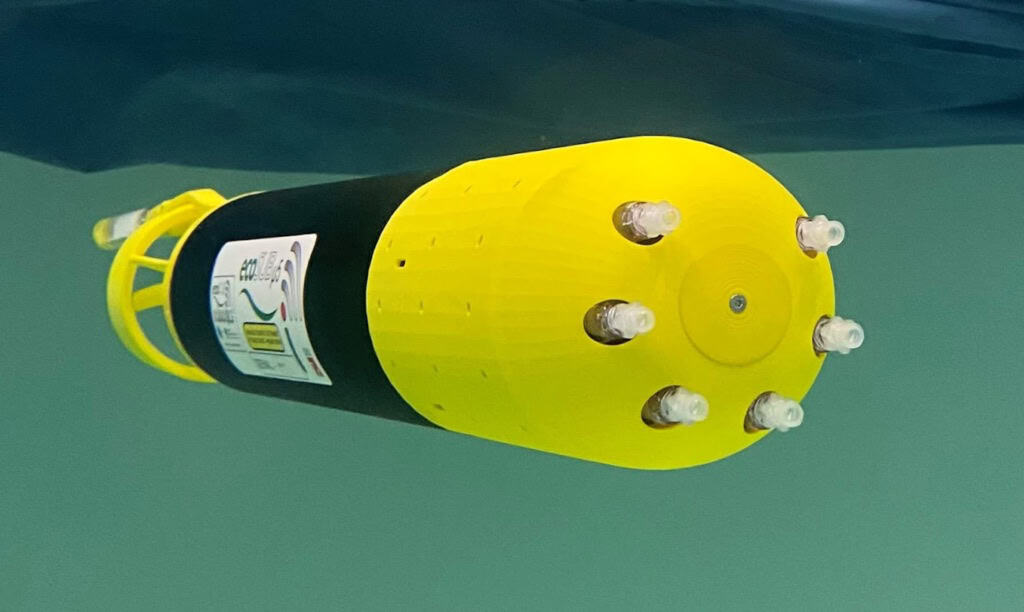
Compact & Lightweight AUVs for Scientific, Commercial & Defense Applications


Underwater Sonar: Side-Scan Imaging Sonar & Forward Looking Sonar for Obstacle Avoidance & Navigation


GNSS Positioning & Navigation Systems, Mobile Mapping UAV LiDAR & Unmanned Surface Vehicles


Weather Monitoring Stations, Marine Transducers, Side-Scan Sonar & Underwater Altimeters

If you design, build or supply Environmental Sensors, create a profile to showcase your capabilities and connect with visitors who have an active requirement for your solutions.

Environmental sensors, or enviro sensors, are devices designed to detect and measure parameters such as temperature, humidity, pressure, air and water quality, and light levels. Environment measurement sensors work by converting environmental conditions into electrical signals that can be processed by monitoring systems.

SeapiX-R 3D Multibeam Sonar by Exail
These instruments are essential components within larger systems used in environmental monitoring across scientific research, weather stations, industrial processes, agriculture, and environmental protection. They help track environmental changes, identify hazards, and support data-driven operational and regulatory decisions. Modern advances in this technology include miniaturized devices, wireless communications, and integration into wider sensor networks.
Some systems use an environmental sensor station or sensor board to combine multiple instruments for broader coverage, while scheduled calibration services maintain accuracy over time.
Environmental monitoring depends on a broad collection of sensor groups, each suited to a specific set of conditions. The following categories retain the sensors already identified while expanding their context and technical function through additional real examples.
Temperature probes include thermometers, infrared devices, and a wider range of sensing elements that capture thermal changes with greater precision. Thermocouples are often used in systems that experience rapid temperature swings, while resistance temperature detectors support work that requires tighter accuracy over long durations.
Industrial drone operations rely on high-temperature probes designed to function inside equipment housings, and immersion sensors measure thermal properties within natural and engineered water systems. Many remote platforms also use compact digital temperature units that stabilize readings through internal compensation components.
Humidity devices measure moisture in the atmosphere using capacitive and resistive elements that respond to small changes in vapor concentration. Dew point sensors determine the point at which moisture begins to condense, making them useful in environments where saturation presents operational risk.
Scientific atmospheric research often uses chilled mirror hygrometers on drones when precise moisture values are required. Thermal conductivity designs are selected for situations with wider or variable humidity conditions. Combined humidity and temperature modules help stations adjust for changing factors that can influence long-term data quality.
Air quality instruments detect a wide range of gases and airborne particles. CO and CO2 units form the foundation of many monitoring systems, while ozone and nitrogen oxide sensors track common urban and industrial emissions. Sulfur dioxide instruments support volcanic and industrial safety assessments, and particulate matter detectors use optical scattering to characterize fine airborne particles.
Photoionization detectors measure low-level organic vapors, and formaldehyde sensors provide additional chemical detail in enclosed facilities. Smoke detectors equipped with optical or ionization sensing elements support both safety and environmental applications.
Sensors that measure light and ultraviolet radiation help quantify solar energy, illumination, and environmental exposure conditions. Pyranometers measure total incoming sunlight and pyrgeometers focus on longwave radiation, creating a fuller picture of natural lighting conditions.
Aerial environmental assessments rely on broadband detectors to characterize day-to-night light cycles, and daylight sensors monitor brightness in built environments. Underwater irradiance sensors measure how light attenuates in aquatic settings, contributing to studies involving aquatic vegetation and water clarity.
Barometric sensors capture atmospheric pressure and support a wide range of modeling and forecasting activities. Compact microelectromechanical units appear in portable and remote instruments, while sealed absolute sensors are used in autonomous stations that must maintain stability under long-term deployment.
Pressure-based altimeters help determine elevation changes, and pressure arrays provide more granular detail for systems that track developing storm patterns or shifting weather fronts.
Underwater sensors incorporate devices that measure pH, dissolved oxygen, turbidity, depth, as well as specialized CTD instruments. These devices are joined by salinity sensors that track salt concentration, ion-selective electrodes that monitor nutrients, and fluorometers that measure chlorophyll and colored dissolved organic matter. Acoustic backscatter sensors help estimate suspended materials in motion, and multiparameter sondes combine several water quality measurements within a single package.
Profiling floats move vertically through the water column to collect data at multiple depths across large regions. Sonar depth finders support mapping, navigation, and spatial assessment of underwater terrain, strengthening work that depends on depth accuracy.
Wind measurement systems include cup and vane instruments, ultrasonic devices for frictionless measurement, and propeller units used in long-term field installations. Hot wire airflow sensors characterize small changes in wind movement within controlled environments, and LIDAR-based wind instruments capture vertical wind structure over a greater distance than traditional sensors.
Acoustic systems detect sound and structure beneath the surface. Hydrophones capture ambient and biological noise, multibeam sonar builds wide-area images, and single beam sonar is used for direct point depth measurement. Side scan sonar creates detailed seafloor images, and parametric sub-bottom profilers investigate layered sediment structures.
Acoustic Doppler Current Profilers (ADCPs) measure water movement at various depths, and broadband passive systems listen for environmental sound signatures associated with marine activity.
Electrochemical devices detect gases and dissolved substances based on selective chemical response. Amperometric sensors measure dissolved gases in water, potentiometric designs track ion concentrations, and solid electrolyte sensors withstand harsh industrial environments. These instruments support both environmental quality assessments and safety protocols that require continuous chemical measurement.
Flow monitoring instruments often pair velocity measurements with temperature or chemical sensing to build a more complete picture of system behavior. Ultrasonic flow meters calculate velocity by measuring changes in sound travel time, electromagnetic flow units track conductive liquids, and thermal mass devices measure the rate of gas movement. Integrated flow systems benefit applications that must evaluate both movement and the characteristics of the fluid itself.
Some operations require engineered combinations of sensors built to withstand specific operational challenges. Custom atmospheric clusters combine pressure, temperature, wind, and gas measurement in a single platform. Marine teams often use rugged multiparameter sondes designed for long-term deployment in corrosive water. Research programs employ bespoke sensor packages that operate in extreme heat, low visibility, or highly variable chemical conditions, enabling accurate measurement when standard instruments cannot be used.
Unmanned systems such as drones, remotely operated vehicles (ROVs), and autonomous vessels extend measurement capabilities into remote or hazardous areas.

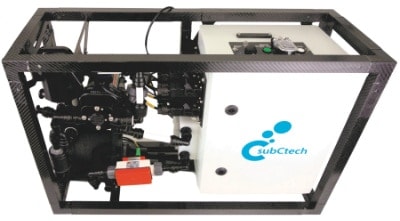
Subsea NetDI® Logger – Versatile AUV & ROV Data Logger by SubCtech
Environmental sensors for drones include anemometers, temperature sensors, and air quality devices for wildfire detection and agricultural assessment.
By combining UAV sensors for environmental monitoring with autonomous navigation and IoT-based data transfer, unmanned platforms improve the accuracy and reach of monitoring operations.
Environmental sensors are indispensable in marine environments for oceanographic research, marine biology, aquaculture, and offshore operations. They measure water temperature, salinity, pH, dissolved oxygen, and turbidity, which are key indicators of water quality and ecosystem health.
Technologies like echo sounders, sonar sensors, and underwater pressure sensors help map the seafloor and assess underwater conditions. Hydrophones and underwater microphones monitor aquatic life and human-made noise pollution. Marine environmental monitoring systems often incorporate underwater cameras and ROV-mounted sensor arrays for comprehensive data collection.
Environmental sensors are foundational to weather monitoring systems used in meteorology, aviation, agriculture, and disaster preparedness. Instruments such as anemometers, barometers, temperature sensors, humidity sensors, and UV sensors are deployed in weather stations to provide real-time updates on changing atmospheric conditions.
These sensors are vital for tracking storms, monitoring climate trends, and supporting public safety through early warning systems. Remote and automated weather stations often rely on solar-powered sensor arrays and wireless data transmission for continuous environmental surveillance in hard-to-reach areas.

MIDAS WLR Sensor by Teledyne Valeport
In industrial settings, specialized sensors are critical for maintaining air and water quality, ensuring regulatory compliance, and protecting worker health. Industrial-grade sensors are used to detect gases like carbon monoxide, carbon dioxide, and nitrogen dioxide, as well as particulates and volatile organic compounds.
Environmental monitors equipped with chemical sensors, smoke detectors, and pressure sensors help identify unsafe conditions and trigger alerts. These sensors are commonly found in factories, power plants, mining operations, and waste management facilities.
Water monitoring is also essential in industrial contexts, where sensors track contamination, pH levels, and chemical concentrations to prevent environmental damage and support sustainable practices. Industrial drones equipped with environmental sensors are increasingly being used to inspect facilities, detect gas leaks, and monitor air quality in areas that are difficult or dangerous for humans to access.
Modern environmental monitoring systems often combine multiple sensor types into a unified platform. Depending on the application, these systems may be stationary, mobile, or remotely deployed. Many are designed for real-time data collection and cloud-based analytics, with features like GPS tagging, wireless connectivity, and automated calibration.
Applications range from precision agriculture and forestry to urban planning and climate research. Solutions are also being adapted for smart city infrastructure and environmental compliance monitoring.
The adoption of IoT environmental sensors has expanded across agriculture, smart cities, and industrial oversight. These platforms connect directly to cloud-based dashboards, while some IoT systems use edge processing to enable faster responses.
Improvements in sensor design have produced energy-efficient, wireless-enabled, and scalable devices that support long-term deployment in both indoor and outdoor settings. When integrated with wireless IoT communications protocols and environmental sensors, drones can provide enhanced supply chain logistics support for remote sites.
Enviro sensors in security are used to safeguard facilities, perimeters, and sensitive areas. By incorporating these sensors with unmanned systems, corporations and agencies can detect smoke, gas leaks, or hazardous emissions across utilities and distribution lines. These monitoring approaches are increasingly integrated into enterprise risk management and urban safety strategies.
The effectiveness of environmental monitoring depends on selecting the right combination of sensors for the conditions and parameters being measured. Factors such as environmental exposure, required measurement accuracy, power availability, and data integration capabilities influence sensor selection. Whether monitoring weather patterns in remote terrain, tracking water quality near industrial discharge zones, or deploying gas sensors inside a manufacturing plant, matching the sensor technology to the task is essential for reliable results.
As environmental challenges grow more complex and the demand for real-time data increases, the role of environmental sensors will only continue to expand, supporting everything from compliance monitoring and risk management to scientific discovery and resource conservation.


 Searching Companies & Products

 Subscribe to the Weekly eBrief
The latest engineering and technical developments straight to your inbox - join thousands of engineers who receive it.
Subscribe to the Weekly eBrief
The latest engineering and technical developments straight to your inbox - join thousands of engineers who receive it.