


Suppliers
Add your company
Reactive Drone
Multi-Constellation GNSS Module for Ultra-Reliable Positioning & Navigation

Platinum Partner

Calian GNSS Ltd
High-Precision GNSS Antennas for Position, Navigation & Timing in Drones, Robots & Autonomous Vehicles

Platinum Partner

Southwest Antennas
High Performance RF & Microwave Antennas for UAVs, Robotics, USVs and Unmanned Marine Vehicles

Platinum Partner

Inertial Labs, a VIAVI Solutions Company
Inertial Navigation Sensors: MEMS IMU, Accelerometers, Gyroscopes, AHRS, GPS-INS & Point Cloud Generation

Platinum Partner

NovAtel
Precise Positioning for Unmanned Vehicles: GPS & GNSS Receivers, Antennas & Inertial Systems

Platinum Partner
TUALCOM
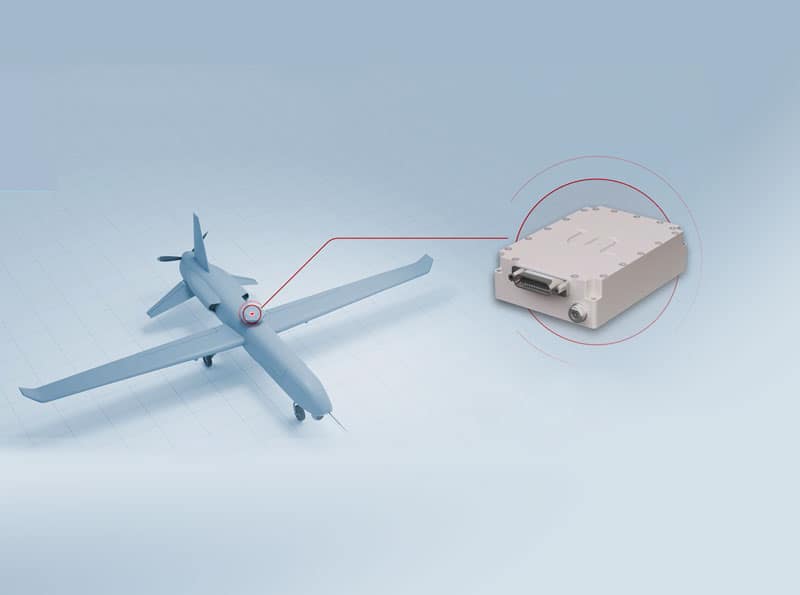
Anti-Jam GPS-GNSS Devices, Tactical Data Links, Telemetry Systems, Electronic Warfare Equipment & Flight Termination Systems

Gold Partner

GNSS.store
High-Performance GNSS/RTK/GPS PNT Solutions for Drone & Robotics OEMs & Systems Integrators

Gold Partner

Harxon Corporation
High-Precision GNSS Antennas: Assured Autonomy & Positioning for Unmanned Systems

Gold Partner

Meteksan Defense
UAV Components: SAR, Radar Altimeter, Data Links, Telemetry, GNSS Products & C-UAS | Tactical USVs

Gold Partner


Showcase your capabilities
If you design, build or supply GPS/GNSS Antennas, create a profile to showcase your capabilities on this page
Products


GNSS Antennas for Remote Equipment and Autonomous Systems

GNSS antennas serve as the RF front end of satellite navigation systems, directly influencing positioning accuracy, multipath mitigation, and timing synchronization. Used in asset tracking, autonomous vehicles, and industrial automation, antenna design determines how effectively GNSS receivers process signals from global positioning systems.

Poseidon GNSS antenna by Advanced Navigation.
Multiband GNSS antennas support L1, L2, and L5 frequencies and enable RTK GNSS, differential GPS, and SBAS corrections. When integrated with inertial measurement units and inertial navigation systems, they maintain positioning during signal loss. Performance depends on the radiating element design, ground-plane size, low-noise amplifiers, bandpass filters, connector type, and phase-center stability.
GNSS Antenna Types for Precision Positioning
Patch Antennas
Patch antennas and microstrip patch antenna designs are widely used in compact GNSS modules and embedded GPS antenna integrations. Ceramic patch and patch GPS antenna configurations offer low-profile installation and consistent hemispherical coverage. They are commonly deployed as active GNSS antennas or passive GNSS antenna variants, depending on whether amplification is integrated.
Helical And Helix Antennas
Helical GNSS antenna designs improve low-elevation satellite reception and multipath resistance. Their circular polarization characteristics make them suitable for dynamic platforms such as unmanned vehicles and marine navigation systems. These antennas often support multi-constellation tracking across GPS, Galileo, GLONASS, and BeiDou.
Choke Ring Antennas
Choke-ring GNSS antennas are engineered for surveying and mapping, land surveying, and RTK station infrastructure. Choke rings and optimized ground planes reduce multipath interference and improve phase center stability for RTK positioning and post-processed kinematic workflows. They are commonly used in geospatial data collection, corridor mapping, and construction automation.
Active GNSS Antennas

Active GNSS antenna by Southwest Antennas.
Active GNSS antenna designs integrate a low-noise amplifier, a preamplifier, and bandpass filters within the antenna housing. This improves signal to noise ratio in remote monitoring systems, pipeline monitoring, and border surveillance deployments with long coaxial cable runs. They are widely used in remote equipment and distributed sensor networks.
Passive GNSS Antennas
Passive GNSS antenna solutions rely on external GNSS receivers for amplification and filtering. These designs are suitable for tightly integrated systems where cable length is minimized, and receiver front-end performance is optimized. Passive architectures are common in industrial automation and embedded satellite positioning systems.
Applications of GNSS Antennas in Unmanned and Remote Systems
Unmanned Aerial Vehicles And Drone Navigation
UAV GNSS antennas support autonomous flight control, precision landing systems, aerial surveying, photogrammetry, lidar mapping, and remote sensing systems. Multiband and RTK antenna configurations enable centimeter-level positioning for drone navigation and geospatial data collection. Platform-specific solutions for weight-sensitive and vibration-constrained airframes are also available.
Autonomous Ground Vehicles And Robotics
Autonomous vehicle positioning in mining automation, agricultural robotics, and construction automation depends on reliable GNSS RTK performance. GNSS antennas integrated with inertial navigation systems (GNSS/INS) provide stable localization for robotic navigation in dynamic environments. High-precision GNSS antenna selection directly influences real-time kinematic positioning accuracy.
Marine And Offshore Navigation
Marine GPS antenna systems are used in ship navigation systems, autonomous shipping, offshore positioning, and unmanned surface vehicle navigation. Antennas must withstand salt spray, vibration, and continuous exposure while maintaining consistent satellite positioning. Integration with SBAS system corrections and differential GNSS enhances maritime navigation systems.
Surveying, Mapping, And Infrastructure Inspection

GAJT-310 anti-jamming antenna by NovAtel.
Land surveying, 3D mapping, infrastructure inspection, railway inspection, and pipeline inspection rely on RTK GNSS antenna and choke ring antenna technologies. Real-time kinematic and post-processed kinematic workflows provide high-accuracy positioning for geospatial data collection. Stable phase center performance is critical in lidar surveying and precision measurement applications.
Asset Tracking And Remote Monitoring
Fleet management, vehicle tracking systems, asset management tracking, and remote monitoring systems depend on compact external GNSS antenna designs. Active GPS antenna and embedded GNSS module solutions provide consistent satellite positioning for distributed industrial assets. Rugged antenna housing and antenna radomes support long-term deployment in harsh environments.
Design And Compliance Considerations
Selection criteria should include frequency-band support, gain patterns, phase-center variation, antenna-array compatibility, and resistance to interference. Anti-jamming GNSS antenna and antenna-array configurations may be required for defense and security applications.
Environmental and defense platforms may require compliance with MIL-STD-810 for shock and vibration durability and DO-160 for airborne equipment qualification. For high-integrity military navigation systems, integration with INS systems and differential GNSS or RTK technology must be validated through controlled GNSS antenna test procedures.
Careful alignment between antenna type, correction method (such as real-time kinematic positioning or differential GPS), and the operational environment ensures reliable satellite navigation system performance across remote equipment and autonomous applications.


