


Suppliers
Add your company


Showcase your capabilities
If you design, build or supply IMSI Catchers, create a profile to showcase your capabilities on this page
Products

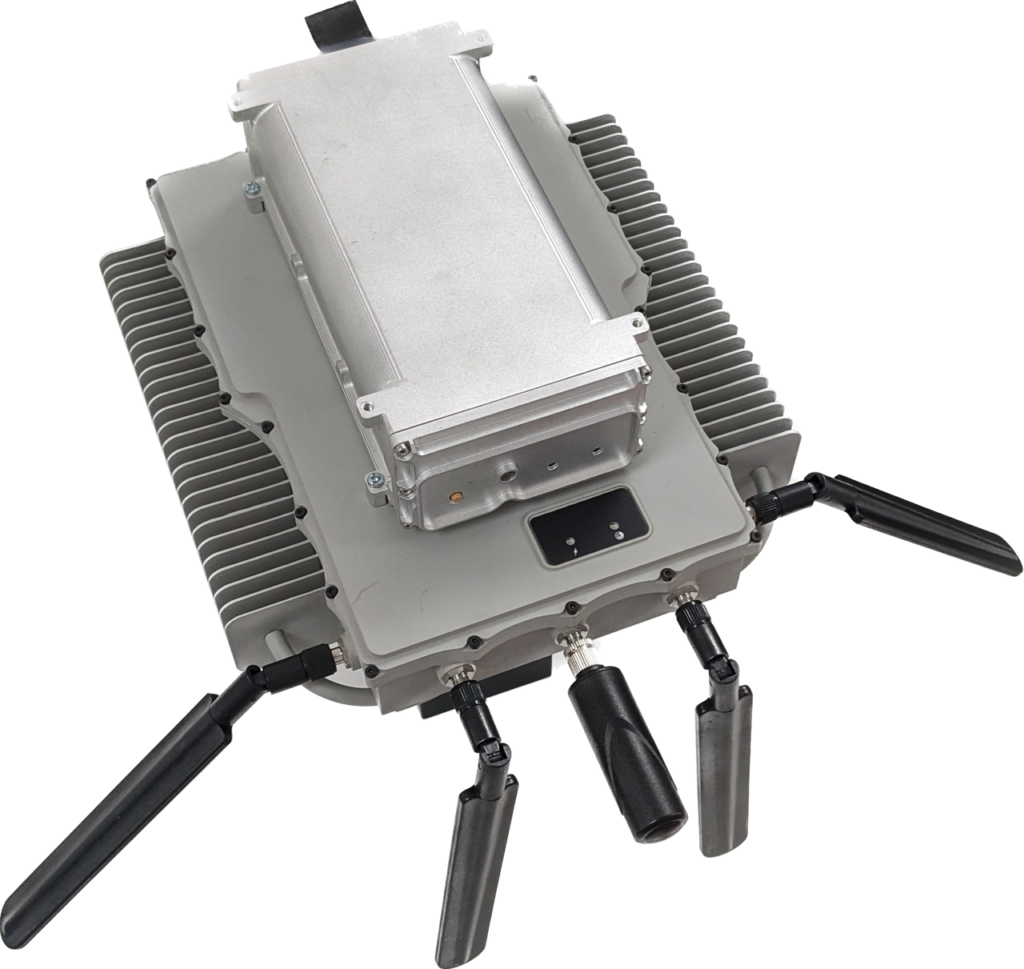

IMSI Catchers for UAVs & Unmanned Surveillance

IMSI catchers, also known as cell site simulators or Stingray devices, interact with mobile phones by mimicking legitimate network infrastructure.
When nearby devices connect, the system captures data such as International Mobile Subscriber Identity (IMSI) numbers, location estimates, and other network identifiers. These systems can support multiple protocols, including GSM, UMTS, LTE, and 5G.
In defense and security contexts, IMSI catchers assist with monitoring, geolocation, and identifying mobile devices in operational environments. Their integration into unmanned systems, such as drones, ground robots, and autonomous surface vessels, enables remote data collection without direct personnel exposure. Typical use cases include area surveillance, network mapping, counterterrorism support, and operational risk assessments.
IMSI Catcher Use in Unmanned Platforms

IMSI catcher, UAV 3.0, from Revector.
When mounted on unmanned aerial vehicles (UAVs), IMSI catchers provide high-elevation signal coverage across expansive or inaccessible areas. These configurations are often selected for wide-area intelligence gathering and persistent monitoring. Systems designed for aerial deployment prioritize weight efficiency and power management while maintaining signal processing capabilities.
Autonomous ground systems benefit from mobility and stealth, making them suitable for urban operations, convoy security, or facility perimeter monitoring. In maritime operations, unmanned surface vessels equipped with these tools enable mobile RF surveillance in littoral and harbor zones.
Core components in these systems may include software-defined radios (SDRs), GNSS/GPS modules for geolocation, power amplifiers for signal reach, and signal processors for real-time data handling. Integrated battery packs and frequency hopping capabilities improve endurance and reduce susceptibility to countermeasures.
IMSI Catcher Applications in Defense and Security
Defense agencies and system integrators employ IMSI catchers for a variety of operational requirements, including:
- Identification of mobile devices in designated areas
- Analysis of mobile network coverage and vulnerabilities
- Support for counterterrorism and threat tracking missions
- Surveillance in support of border control and infrastructure protection
- Detection of unauthorized base stations or spoofing activity
- Electronic warfare operations targeting adversary communications
- Security sweeps during events or high-value missions
These systems also play a role in mobile network testing, especially when assessing spectrum usage and cellular infrastructure resilience in forward-deployed environments.
Types and Configurations
IMSI catchers are available in several form factors:
- Portable units: Designed for field operatives and tactical response teams; typically battery-powered and backpack-carried.
- Vehicle-mounted systems: Installed in mobile surveillance vehicles for urban or roadside deployment.
- UAV-integrated modules: Lightweight, low-power systems designed for airborne signal collection.
- Fixed installations: Used in static monitoring or secure facility protection.
- Naval and maritime units: Deployed on unmanned or manned vessels for coastal surveillance operations.
Some systems include both IMSI and IMEI tracking, with capabilities for baseband emulation, directional scanning, and frequency agility across multiple cellular standards.
Technical Components
Modern IMSI catcher platforms may include the following elements:
- Software Defined Radios (SDRs): Provide flexible protocol emulation and wideband frequency support.
- Power Amplifiers: Improve signal range and reduce detection latency.
- Antenna Arrays: Enable directional detection, scanning, and beamforming.
- Baseband Processors: Simulate network signaling for multiple standards.
- Signal Filters: Improve signal-to-noise ratio in congested RF environments.
- Battery Packs: Support long-duration missions, particularly for unmanned platforms.
- Remote Control Interfaces: Allow command and monitoring from secure stations.
- GPS Modules: Enable geolocation of targets and position referencing.
IMSI catcher variants may also include data loggers for offloading information to central servers and secure communication modules for encrypted uplinks.
IMSI Catcher Detection and Countermeasures
In addition to active collection, detection tools are used to identify the presence of unauthorized or hostile IMSI catcher systems. These may be employed to secure facilities, high-level meetings, or defense communications by alerting users to potential interception threats. Some configurations offer neutralization functions or defensive countermeasures, particularly when deployed in contested electromagnetic environments.
Standards and Compliance

IMSI catcher, MPS 3.0, from Revector.
IMSI catcher systems for defense often comply with strict technical standards to ensure reliability and interoperability. These include:
- MIL-STD-461: Governs electromagnetic interference control.
- MIL-STD-810: Covers environmental ruggedization for temperature, vibration, and moisture.
- STANAG protocols: Ensure compatibility within NATO-aligned forces.
- 3GPP compliance: Ensures accurate emulation and support for global telecom protocols.
- NIST data security guidelines: Applicable for encryption, logging, and data handling practices.
Export, licensing, and operational deployment of IMSI catchers are typically subject to national regulatory oversight and classified handling requirements.
Comparison with Related Systems
IMSI catchers differ from other RF surveillance and interception technologies in several ways:
- Cell Site Simulators vs. Passive Monitoring: IMSI catchers actively engage devices, unlike passive systems that monitor existing traffic.
- Dedicated Devices vs. SDR Platforms: Some solutions are built solely for IMSI acquisition, while others use configurable SDRs for multi-mission flexibility.
- Detection Tools vs. Interceptors: IMSI catcher detectors are defensive and designed to alert users to surveillance threats rather than collect data.
Each approach serves a distinct role in electronic surveillance and may be integrated into a broader signal intelligence architecture.
Emerging Trends
Several developments are shaping next-generation IMSI catcher systems:
- Support for 5G NR and 4G LTE-A: As networks modernize, interception tools adapt to newer protocols and encryption standards.
- Machine Learning Integration: AI-based analytics are being developed to process large metadata volumes and detect behavioral patterns.
- Miniaturization and Energy Efficiency: Ongoing R&D focuses on reducing system size and power consumption for smaller unmanned platforms.
- Multi-Sensor Fusion: Combining IMSI data with EO/IR, radar, and other inputs to generate comprehensive situational awareness.
- Real-Time Encryption Detection: Identifying secure communication flows without attempting content decryption.
These trends support more flexible, responsive, context-aware surveillance operations in dynamic environments.
Strategic Considerations for Procurement
Defense procurement programs evaluating IMSI catcher solutions must assess operational requirements, platform compatibility, and compliance standards. Selection criteria may include:
- Supported cellular bands and protocols (GSM, UMTS, LTE, NR)
- Signal coverage and effective range
- System weight, size, and power (SWaP) characteristics
- Integration capability with existing unmanned systems
- Encrypted data storage and secure transmission
- Licensing and legal framework for deployment
- Software upgradability and support lifecycle
IMSI catcher platforms that offer modularity and SDR-based configurations are often preferred for evolving threat scenarios and mission adaptability.


