Inertial Navigation Systems (INS) for Drones and Other Unmanned Platforms

Inertial navigation systems (INS) are a key component in enabling autonomous navigation in drones and other unmanned systems. By continuously measuring rotation and acceleration, INS enables precise tracking of position, velocity, and orientation, even when GPS or other external signals are unavailable. As unmanned aerial vehicles (UAVs), unmanned ground vehicles (UGVs), unmanned surface vehicles (USVs), and other platforms become increasingly autonomous and deployed in complex environments, the importance of robust INS solutions cannot be overstated.

Suppliers

Add your company
Advanced Navigation

High-Accuracy Navigation & Positioning Solutions for Unmanned & Autonomous Vehicles

AMCORIS

Cutting-Edge Advanced Sensor Technologies for Drones & Autonomous Vehicles

Micro Magic

Industrial & Automotive-Grade Inertial Sensing Systems for UAVs, Robotics & Autonomous Vehicles

Trimble Applanix

Precision Positioning & Orientation Solutions for Unmanned Applications

ANELLO Photonics

High-Precision Inertial Navigation for GPS-Denied Environments

Honeywell Aerospace

BVLOS Solutions for UAS & UAM: Fuel Cells, Radar, Navigation Sensors, Flight Control & SATCOM

Greensea IQ

Robotics and Subsea Technologies for Defense, Commercial & Science Applications

FIBERPRO

Tactical-Grade Fiber Optic Gyros & FOG IMU for UAVs & Autonomous Vehicles

VectorNav Technologies

High-Performance Inertial Navigation Systems (INS) for Unmanned Systems

Exail

Inertial Navigation & Positioning Technology for Unmanned, Autonomous Systems

Microstrain by HBK

Inertial Sensors, MEMS IMU, AHRS Systems, Vertical Reference Units & GNSS-INS for Unmanned Systems

Inertial Labs, a VIAVI Solutions Company

Inertial Navigation Sensors: MEMS IMU, Accelerometers, Gyroscopes, AHRS, GPS-INS & Point Cloud Generation

SBG Systems

Inertial Navigation Systems, INS/GPS, AHRS, and IMU Sensors for Unmanned Systems

NovAtel

Precise Positioning for Unmanned Vehicles: GPS & GNSS Receivers, Antennas & Inertial Systems

Xsens

Low-SWaP Inertial Sensing Solutions for Unmanned & Autonomous Systems

EMCORE Corporation

High Performance FOG, RLG, and Quartz MEMS Inertial Sensors - Gyros, IRU, IMU, INS

Gladiator Technologies

MEMS Inertial Sensors: IMUs, GPS-Aided INS, Gyroscopes, Accelerometers, AHRS

Sonardyne International

Tracking, Navigation, Positioning and Communication Sensors for AUV, ROV, USV

AvioRace

Electronic Components, Batteries & Sensors Supplier for OEM UAVs/Drones

CHC Navigation

GNSS Positioning & Navigation Systems, Mobile Mapping UAV LiDAR & Unmanned Surface Vehicles

UAV Propulsion Tech

MEMS-Based INS & Inertial Sensors for UAVs & Unmanned Systems

Showcase your capabilities

If you design, build or supply Inertial Navigation Systems (INS), create a profile to showcase your capabilities on this page

Create Supplier Profile

Products

IRINS

LEO-aided INS for assured PNT in contested domains

LEO-aided INS for assured PNT in contested domains
...ht coupling of inertial sensing, LEO-based timing/navigation, and anti-jam GNSS (with CRPA port)...
Vision-Aided Inertial Navigation System (VINS)

High-accuracy inertial navigation system engineered for GNSS-denied environments

High-accuracy inertial navigation system engineered for GNSS-denied environments
The VINS Inertial Navigation System delivers precise positioning and orientation for unmanned... ...high-precision navigation solution designed for unmanned vehicles and autonomous platforms operating...
INS-DM-FI GPS-Aided INS

IP68-rated dual-antenna FOG GNSS-INS

IP68-rated dual-antenna FOG GNSS-INS
...art GNSS-aided inertial navigation system (INS) that incorporates tactical-grade fiber optic...
INS-FI GPS-Aided-INS

Dual-antenna tactical-grade FOG-based GNSS-INS

Dual-antenna tactical-grade FOG-based GNSS-INS
...art GNSS-aided inertial navigation system (INS) that incorporates tactical-grade fiber optic...
ANELLO Aerial INS

High-Performance Inertial Navigation System for Autonomous Aerial Operations

High-Performance Inertial Navigation System for Autonomous Aerial Operations
... high-accuracy inertial navigation for uncrewed aerial platforms operating in GPS-denied or...
ANELLO Maritime INS

Ultra-reliable maritime navigation for USVs & AUVs

Ultra-reliable maritime navigation for USVs & AUVs
...is a precision navigation solution for autonomous surface vessels (ASVs) and autonomous underwater...
ANELLO Evaluation Kit

Reference-grade evaluation kit for GNSS-INS technology

Reference-grade evaluation kit for GNSS-INS technology
...cal Gyroscope) inertial technology. Providing sustained centimeter-level accuracy in conditions such...
ANELLO Ground INS

High-precision navigation for GPS-denied environments

High-precision navigation for GPS-denied environments
...level accurate navigation for drones and robotics operating under GNSS-denied conditions such as...
Boreas A50 & D50 FOG INS

Compact FOG-based AHRS & INS with north-seeking gyrocompass

Compact FOG-based AHRS & INS with north-seeking gyrocompass
...ding Reference System (AHRS) and Inertial Navigation System (INS) designed for precision navigation... ...nclude defense navigation, guidance, and control systems, as well as mining equipment alignment and...
Certus Mini N & Mini D MEMS GNSS/INS

SWaP-optimized single- and dual-antenna GNSS/INS

SWaP-optimized single- and dual-antenna GNSS/INS
...ature Advanced Navigation’s revolutionary AI-powered fusion algorithm that delivers accuracy... ... wide range of drone and robotics applications, and are seamlessly compatible with industry-standard...
Boreas D70 & D90 Digital FOG INS

High-precision FOG GNSS/INS for unmanned navigation & stabilization

High-precision FOG GNSS/INS for unmanned navigation & stabilization
.... This compact navigation solution employs an AI-enhanced fusion algorithm to deliver consistent,...
Subsonus USBL Underwater Acoustic Positioning System

High accuracy, miniature USBL for AUVs, ROVs

High accuracy, miniature USBL for AUVs, ROVs
...ic positioning system combining an industry-leading eight channel factory calibrated hydrophone...
IQNS

Integrated navigation & autonomy platform for small underwater vehicles

Integrated navigation & autonomy platform for small underwater vehicles
...he company’s inertial navigation system (INS) product line, building directly on the proven GS4... ... complete GNCC platform, the IQNS provides onboard processing power for AI/ML applications such as...
INS-U GPS-INS

INS-U GPS-INS Single-antenna MEMS GPS-aided INS with ADC

INS-U GPS-INS Single-antenna MEMS GPS-aided INS with ADC
The Inertial Labs INS-U is a MEMS-based GNSS-aided inertial navigation system that also provides...
FN 210G INS

Inertial navigation system for gyrocompassing applications

Inertial navigation system for gyrocompassing applications
...gh-performance inertial navigation system designed for gyrocompassing applications, providing...
HGuide o480 Inertial/GNSS Navigator

Compact Inertial Navigation System for GNSS-Denied Environments

Compact Inertial Navigation System for GNSS-Denied Environments
...ghly resilient inertial navigation system engineered for use in lightweight autonomous platforms...
NAUTILUS

FOG-based GNSS-INS for precise naval & marine navigation

FOG-based GNSS-INS for precise naval & marine navigation
...y of FOG-based inertial navigation systems is designed for naval applications, providing scalable...
PETRA 3000

High-precision FOG INS with embedded GNSS for land vehicles

High-precision FOG INS with embedded GNSS for land vehicles
...3000 family of inertial navigation systems, equipped with embedded GNSS receivers, is designed for...
PETRA

FOG-based GNSS-aided INS for high-precision land vehicle navigation

FOG-based GNSS-aided INS for high-precision land vehicle navigation
... of GNSS-aided inertial navigation systems is engineered for high-precision pointing, localization,...
FOG Inertial Navigation Systems

Advanced FOG-based GNSS-aided INS for drone & autonomous vehicle navigation

Advanced FOG-based GNSS-aided INS for drone & autonomous vehicle navigation
...also ideal for drone and autonomous vehicle navigation in GPS-denied environments or during jamming...
MEMS Inertial Navigation Systems

Cost-effective GNSS-aided INS for drone & autonomous vehicle navigation

Cost-effective GNSS-aided INS for drone & autonomous vehicle navigation
...also ideal for drone and autonomous vehicle navigation in GPS-denied environments or during jamming...
Trimble PX-1 RTX

Triple-frequency GNSS-inertial solution with centimeter-level accuracy

Triple-frequency GNSS-inertial solution with centimeter-level accuracy
...g solution for drones and advanced air mobility applications, incorporating embedded...
3DM-GV7-INS GNSS-Aided INS

IP68-rated tactical-grade inertial navigation system

IP68-rated tactical-grade inertial navigation system
...tactical-grade inertial navigation system packaged in a rugged IP68-rated enclosure and...
3DM-CV7-INS

Tactical-Grade Embeddable INS

Tactical-Grade Embeddable INS
...tactical-grade inertial navigation system in an extremely compact and lightweight OEM package....
3DM-GQ7-GNSS/INS Inertial Navigation System

Tactical Grade, Dual Antenna, RTK-Enabled System

Tactical Grade, Dual Antenna, RTK-Enabled System
...a, RTK-enabled system with Auto-Adaptive Extended Kalman Filter designed for performance in... ... an all-in-one navigation solution featuring centimeter-level position accuracy. It is our first...
3DM-CX5-GNSS/INS Inertial Navigation System

Miniature industrial-grade multi-constellation GNSS-INS in OEM package

Miniature industrial-grade multi-constellation GNSS-INS in OEM package
...gh-performance inertial navigation solution with integrated multi-constellation GNSS receiver for...
Marins M7 INS

Military & strategic grade inertial navigation system

Military & strategic grade inertial navigation system
...-the-art naval inertial navigation systems which are designed to meet the demands of the navies for...
Marins M5 INS

Military-grade FOG inertial navigation system

Military-grade FOG inertial navigation system
...-the-art naval inertial navigation systems, designed to meet the demands of the navy for the highest...
Marins M3 INS

Military strategic-grade FOG inertial navigation system

Military strategic-grade FOG inertial navigation system
...-the-art naval inertial navigation systems that enables stealth autonomous navigation for submarines...
Phins Compact C7 INS

Most Compact lnertial Navigation System for AUV’s

Most Compact lnertial Navigation System for AUV’s
... of high-grade inertial navigation systems dedicated to unmanned vehicles....
Quanta Extra

The most accurate INS/GNSS system for demanding survey applications

The most accurate INS/GNSS system for demanding survey applications
...t accurate INS system, tailored for demanding survey applications in the full foreseeable range of...
Quanta Plus

GNSS-aided Inertial Navigation System designed for UAV and land-based surveying solutions

GNSS-aided Inertial Navigation System designed for UAV and land-based surveying solutions
Quanta Plus combines a tactical MEMS IMU with a high-performance GNSS receiver to get reliable posit...
Quanta Micro

High performance INS in an extremely compact form factor

High performance INS in an extremely compact form factor
...efits from SBG Systems unique experience in designing and manufacturing inertial sensors, including... ...combination of navigation performance and SWAP-C. Quanta Micro leverages a survey grade IMU for...
Ekinox Micro GNSS/INS

Compact high-performance GNSS-aided INS for drones & robotics

Compact high-performance GNSS-aided INS for drones & robotics
...gh-performance Inertial Navigation System (INS) featuring a quad-constellation, multi-frequency...
VN-210E – Tactical-Grade Embedded GNSS/INS

Miniature inertial sensors with a RTK and PPK-capable multiband GNSS receiver

Miniature inertial sensors with a RTK and PPK-capable multiband GNSS receiver
...ines miniature inertial sensors with a RTK and PPK-capable multiband GNSS receiver to enable...
VN-310E – Tactical-Grade Embedded Dual-Antenna GNSS/INS

High-precision pointing, stabilization and direct georeferencing

High-precision pointing, stabilization and direct georeferencing
...ate-of-the-art inertial sensors with two RTK and PPK-capable multiband GNSS receivers for...
VN-200 SMD Surface Mount GPS/INS

Compact industrial-grade GPS-aided MEMS INS for drones and robotics, with SMD form factor

Compact industrial-grade GPS-aided MEMS INS for drones and robotics, with SMD form factor
...ance GPS-Aided Inertial Navigation System (GPS/INS) in a compact surface mount package for direct...
VN-200 Rugged GPS/INS

Compact industrial-grade MEMS GPS/INS for UAV/drones, packaged in machined aluminium enclosure

Compact industrial-grade MEMS GPS/INS for UAV/drones, packaged in machined aluminium enclosure
...ance GPS-Aided Inertial Navigation System (GPS/INS) in a plug-and-play enclosed package milled from...
Xsens Vision Navigator

Combined GNSS & visual-inertial odometry solution

Combined GNSS & visual-inertial odometry solution
...ra, and visual-inertial odometry technology to provide accurate real-time navigation data for...
MTi 600-Series

Industrial-grade inertial sensing solutions with rugged & OEM options

Industrial-grade inertial sensing solutions with rugged & OEM options
......ground robotics, drones, gimbal and payload stabilization, and USV/AUV/ROV navigation and...
SPRINT-Nav U

Ultra-compact hybrid acoustic–inertial subsea navigator

Ultra-compact hybrid acoustic–inertial subsea navigator
...his all-in-one navigation system fuses AHRS, DVL, INS, and depth data to deliver precise, reliable...
SPRINT-Nav

Integrated subsea & surface vehicle navigation system for USVs & AUVs

Integrated subsea & surface vehicle navigation system for USVs & AUVs
...ct, all-in-one navigation instrument combining inertial, Doppler, and depth sensing in a single...
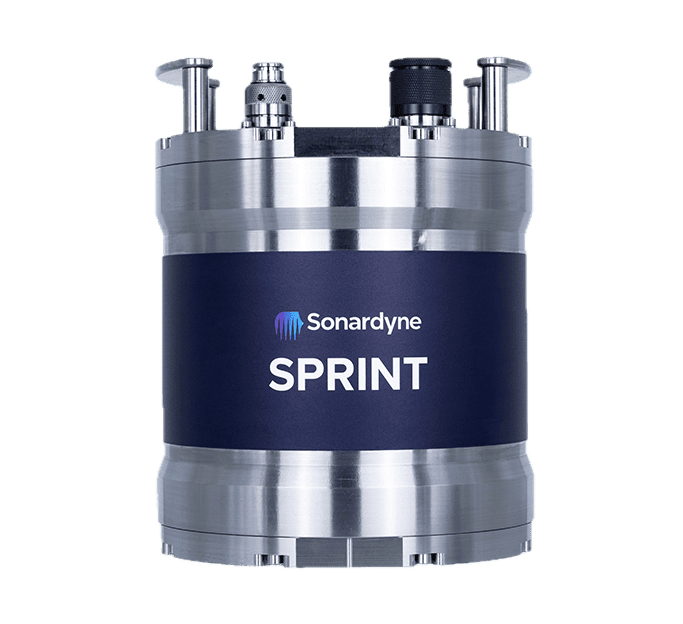
SPRINT

Acoustically aided subsea inertial navigation system for ROVs & AUVs

Acoustically aided subsea inertial navigation system for ROVs & AUVs
...ecision subsea Inertial Navigation System (INS) engineered to deliver robust and efficient...
TACNAV 3D

FOG-based tactical INS for 3D navigation in all terrains

FOG-based tactical INS for 3D navigation in all terrains
...based tactical inertial navigation system (INS) with embedded GNSS receiver that provides assured...
GEO-FOG 3D INS: Fiber Optic Gyro-based Inertial Navigation System

Rugged, Highly Accurate FOG-based INS and AHRS with Embedded GNSS

Rugged, Highly Accurate FOG-based INS and AHRS with Embedded GNSS
... GEO-FOG 3D™ inertial navigation system (INS) is a commercial off-the-shelf navigation and control... ...ture satellite navigation systems including GPS, GLONASS, GALILEO, and BeiDou. It also offers data...
SDN500 GPS/INS

Tactical Grade Inertial Navigation System

Tactical Grade Inertial Navigation System
...tactical grade navigation system combines latest generation quartz gyros, quartz accelerometers,...
Inertial Navigation Systems

MEMS-based INS & inertial sensors for UAVs & unmanned systems

MEMS-based INS & inertial sensors for UAVs & unmanned systems
Aeron Systems, represented by UAV Propulsion Tech, produces proven MEMS-based inertial sensing... ......; MEMS accelerometer and magnetometer-based unit ideal for UAV/USV/UUV compassing and navigation...
CGI-230 GNSS-INS

Automotive-grade GNSS-aided inertial navigation system for UGVs & robotics

Automotive-grade GNSS-aided inertial navigation system for UGVs & robotics
...led GNSS-aided inertial navigation system (INS) that provides high-precision navigation capabilities...
Inertial, Environmental & Position Sensors

Sensing & data acquisition solutions for drones and robotics

Sensing & data acquisition solutions for drones and robotics
... solutions for drones and robotics, covering a wide range of data acquisition requirements, ensuring...

Inertial Navigation Systems (INS) for Drones and Other Unmanned Platforms

Caroline Rees

Updated:

Inertial navigation systems (INS) empower drones, unmanned vehicles, and maritime platforms with precise positioning, even when GPS fails.

By fusing gyroscope, accelerometer, and magnetometer data through robust filters, such as the Kalman algorithm, INS enables reliable navigation under GNSS-denied conditions. While MEMS‑based INSs are well suited to compact RPAs, navigation‑grade systems serve tactical, maritime, and defense needs.

How Inertial Navigation Systems Work?

Inertial navigation system from Honeywell.

HGuide o480 Inertial/GNSS Navigator, from Honeywell.

An INS relies on a network of inertial sensors, gyroscopes, accelerometers, and often magnetometers, to compute real-time position and orientation through dead reckoning. Gyroscopes measure angular velocity (heading, roll, pitch), while accelerometers record linear acceleration in multiple axes. Magnetometers provide heading references aligned with Earth’s magnetic field to mitigate drift.

These raw measurements are processed through computational algorithms, such as Kalman filters, which fuse sensor readings, reference inputs (like GNSS when available), and inertial dynamics, yielding refined estimates of navigation states. This continuous sensor fusion corrects biases, minimizes drift, and improves accuracy.

Core INS Components

Gyroscopes (gyros)

Gyroscopes are essential to inertial navigation systems, measuring angular velocity along the platform’s axes: pitch, roll, and yaw. In unmanned platforms, particularly drones, MEMS gyroscopes are often used due to their compact size and low power consumption. For higher accuracy applications, such as in tactical UAVs or underwater vehicles, fiber-optic or ring-laser gyros provide significantly greater stability and lower drift rates. Fiber optic gyroscopes (FOG), in particular, are valued for their rugged design, long-term reliability, and absence of moving parts, making them well suited to harsh or dynamic environments.

Accelerometers

MEMS Inertial Navigation System from GuideNav.

MEMS Inertial Navigation System from GuideNav.

Accelerometers detect linear acceleration across multiple axes, allowing the INS to estimate changes in velocity and displacement. Inertial navigation systems double-integrate acceleration data to compute position; however, this process can introduce errors over time. Advanced filtering and bias correction are used to mitigate drift. MEMS accelerometers are commonly used in lightweight platforms, while high-performance systems benefit from more sensitive and lower-noise variants.

Magnetometers

Magnetometers measure the Earth’s magnetic field to provide heading information. These sensors act like digital compasses, offering a global reference point to help mitigate yaw drift in inertial calculations. However, they are sensitive to magnetic interference, particularly in electrically noisy environments or near ferrous materials. Despite this, magnetometers remain a key component in many small and mid-size drone navigation systems.

GNSS receivers

When available, GNSS receivers significantly enhance INS performance by correcting accumulated errors in position and velocity estimates. Many INS configurations use tightly coupled GNSS/INS integration, with RTK corrections or dual-antenna GNSS modules enabling high-precision navigation. This is especially valuable in applications requiring centimeter-level accuracy, such as surveying or precision agriculture.

Barometric altimeters

For vertical positioning, barometric altimeters offer an alternative or supplement to GNSS-derived altitude. These sensors infer elevation by measuring atmospheric pressure, which changes with height. While subject to drift and weather variability, barometric data can be stabilized through periodic calibration or fusion with GNSS and inertial estimates.

Embedded computational software

INS systems rely on embedded software to process sensor data in real time. Kalman filters—particularly Extended Kalman Filters (EKF)—are the most common fusion algorithms, combining inertial data with external inputs to refine navigation estimates. Software must account for sensor drift, environmental changes, and real-time processing constraints, especially in high-dynamic or GNSS-denied environments.

Types of INS for Unmanned Platforms

Navigation-grade INS (also known as conventional or standalone INS) utilizes high-grade sensors, such as ring laser gyros (RLG) or fiber optic gyros (FOG), and precision accelerometers. These systems are capable of delivering highly accurate position and orientation data over extended periods without external input; however, they are typically large, expensive, and power-hungry. They are used in aerospace, submarines, and other mission-critical platforms where long-term reliability is essential.

Standalone MEMS INS

MEMS INS uses microelectromechanical systems (MEMS) gyroscopes and accelerometers. These systems are significantly smaller, lighter, and more energy-efficient, making them ideal for drones, consumer electronics, and portable platforms. However, they typically suffer from higher drift rates and lower accuracy over time compared to navigation-grade systems.

Tactical/military INS

Tactical-grade INS bridges the gap between MEMS and navigation-grade systems. They utilize higher-grade inertial sensors with enhanced bias stability and reduced drift. These systems are used in military UAVs, ground vehicles, and certain industrial applications that require better accuracy without the cost or bulk of full navigation-grade INS.

GNSS-aided INS (GNSS/INS) systems

GNSS/INS or integrated INS fuse inertial data with GNSS (Global Navigation Satellite System) input to correct for drift and improve accuracy over time. These hybrid systems are common in both commercial and military applications, especially where intermittent GNSS signal loss is expected, such as urban canyons, under canopy, or in contested environments.

Other Unmanned Vehicles

UGVs (Unmanned Ground Vehicles)

INS supports odometry in conditions where wheel encoders become unreliable, such as during slippage or terrain transitions. It works in conjunction with cameras, computer vision systems, LiDAR, and vehicle management systems to enhance overall navigation and autonomy.

USVs & autonomous surface vessels

INS provides heading and position in maritime environments. Coupled with GNSS and compass systems, they support deep-sea navigation, offshore surveys, and vessel stabilization.

UUVs & AUVs (Underwater Vehicles)

Often operate submerged where GNSS is unavailable. INS is essential, using inertial sensors, DVL (Doppler velocity log), depth sounders, sonar, and pressure altimeters for underwater navigation.

INS Performance

The performance of an inertial navigation system is typically evaluated by its attitude accuracy, position drift, and stability over time. High-end systems, such as those used in tactical UAVs or maritime platforms, can maintain orientation within 0.1 degrees and limit position drift to under a meter per hour. In contrast, compact MEMS-based systems for small drones are generally accurate within 0.5 to 1 degree, although they exhibit higher drift rates. Other important factors include the system’s update rate, bias stability, and ability to maintain accurate altitude, especially when GNSS signals are weak or unavailable. These metrics are critical when selecting an INS for applications that demand precise, uninterrupted navigation.

Integration Challenges & Best Practices

Sensor selection must balance size, weight, power, and cost based on platform constraints. Smaller UAVs typically use MEMS sensors, while larger or mission-critical systems may incorporate tactical-grade IMUs. Calibration is essential to correct for temperature drift, mechanical misalignment, and vibration influences. Software must be robust, capable of running high-frequency filtering (e.g., EKF) in real-time to combine data from inertial sensors, GNSS, and optionally, vision or LiDAR systems.

For GNSS-denied operations, systems must be capable of autonomous mode-switching and error handling, while long-duration missions require exceptionally low-drift navigation and precise modeling of dynamic conditions. Regulatory considerations may also require system certification, especially in defense, aerospace, or maritime applications.

INS vs GPS

GNSS/INS systems offer optimal performance by fusing satellite positioning with inertial estimates, correcting for drift, and increasing reliability. Pure INS, while resilient to jamming and obstructions, suffers from error accumulation over time. Hybrid approaches, particularly tightly coupled architectures, enable the simultaneous processing of raw GNSS data and IMU data within filtering algorithms, resulting in improved performance in challenging environments.

Computational Considerations

Inertial navigation software must process sensor inputs with minimal latency to ensure accurate navigation. Real-time Kalman filtering, typically running at 50 to 200 Hz, is required to maintain responsive navigation. Advanced systems integrate additional sensors, such as LiDAR, vision, and radar, to enhance spatial awareness and precision, particularly in GNSS-denied or low-featured environments. The choice of onboard processor and system architecture has a significant influence on system performance, particularly when computational overhead must be kept low.

Applications

Inertial navigation is essential in precision mapping and aerial surveying, where GNSS-aided INS systems with RTK GNSS deliver centimeter-level accuracy. In drone-based delivery and inspection, robust INS maintains stability and flight control even in cluttered or obstructed areas. In the maritime domain, USVs and AUVs rely on INS for reliable heading, depth, and stabilization in dynamic sea conditions. Tactical and defense applications require high-accuracy, jam-resistant systems that can maintain orientation and position with minimal external input.

Mission-Grade Performance

While GNSS integration improves overall performance, INS alone is essential for operations in GNSS-denied environments, such as indoors, underwater, urban canyons, or under jamming conditions. INS systems scale from cost‑effective MEMS solutions in small drones to highly stable navigation-grade units used in defense, maritime, and tactical applications. Understanding sensor specs, drift behaviors, filtering algorithms, and integration strategies is key to achieving mission‑grade navigational performance.

Related Articles

VectorNav Enhances Tactical IMU & INS with High-G Sensors

VectorNav has introduced 90G and 250G accelerometers and 4000°/sec gyroscope ranges across its tactical IMU and INS platforms, supporting reliable navigation in high-G, GPS-denied environments for interceptor, hypersonic, and counter-UAS applications

Mar 26, 2026
ANELLO Photonics & Q-CTRL Partner to Advance Resilient UAV Navigation

ANELLO Photonics and Q-CTRL integrate silicon photonics and quantum sensing to maintain precise positioning for autonomous platforms in contested environments

Mar 26, 2026
SBG Systems Unveils Stellar-40 INS for High-Vibration & Electronic Warfare Environments

SBG Systems introduces Stellar-40, a modular Inertial Navigation System (INS) designed to provide tactical-grade positioning for land, air and marine platforms operating in electronically challenged environments

Mar 24, 2026
Advanced Navigation Secures $110 Million Series C Funding for PNT Technologies

Advanced Navigation has raised $110 million in Series C funding to support global expansion, scale its Positioning, Navigation, and Timing technologies, and expand its capabilities for autonomous systems operating in complex environments

Mar 20, 2026
Addressing INS Supply Chain Challenges for UAVs

Advanced Navigation explains how its vertically integrated manufacturing approach addresses challenges associated with traditional inertial navigation system supply chains, enabling scalable UAV fleet deployment

Mar 13, 2026
SBG Systems Releases Firmware 6.0 to Advance UAV Navigation & Sensor Fusion

SBG Systems’ Firmware 6.0 introduces fixed-wing UAV motion profiles, enhanced sensor fusion algorithms, expanded magnetometer and DVL support, and improved dead reckoning for Ekinox, Apogee, Quanta, and Navsight systems

Mar 09, 2026
Low-SWaP Inertial Sensing Solutions for Drones & Robotics

Xsens' product portfolio features compact designs and advanced sensor fusion, and is ideal for OEMs and systems integrators

Mar 06, 2026
ANELLO Photonics & Mythos AI Partner to Secure GPS-Denied Maritime Navigation

New strategic collaboration between ANELLO and Mythos AI integrates silicon photonics with intelligent software to ensure continuous autonomous operations in contested environments

Mar 04, 2026
Micro-Magic Launches U5000 Tactical MEMS IMU

Micro-Magic Inc introduces the U5000 high-performance Inertial Measurement Unit (IMU) to provide a tactical-grade domestic alternative for industrial and aerospace navigation

Feb 25, 2026