Showcase your capabilities
If you design, build or supply Printed Circuit Boards PCB, create a profile to showcase your capabilities on this page

PCB design for drones and unmanned systems delivers the electrical backbone for control, sensing, communications, and power management across UAVs, UGVs, USVs, and UUVs. Effective circuit board design and pcb layout design address SWaP limits, vibration and shock, humidity and corrosion exposure, and thermal hotspots from processors and RF stages. Typical solutions include rigid, flex, and rigid-flex architectures, plus HDI routing for high pin-count compute and high-speed video/data links. Custom pcb design also supports EMI/EMC control, impedance management, and ruggedization measures such as conformal coating and traceability.
Read the Technology Overview

Contract Electronics Manufacturing (CEM Services) for Unmanned Systems, UAVs & Robotics


PCB Fabrication & Assembly; RF, Military Grade, Flex, & Metal Core PCB Capabilities for Unmanned Systems

If you design, build or supply Printed Circuit Boards PCB, create a profile to showcase your capabilities on this page

Printed circuit boards (PCBs) provide the vital interconnection, signal conditioning, power distribution, and processing foundations that allow autonomous and remotely operated unmanned systems to carry out a wide variety of missions and tasks.
PCB design considerations, including board layout, material selection, stack-up configuration, and protection strategy directly influence platform capability, endurance, and resilience.

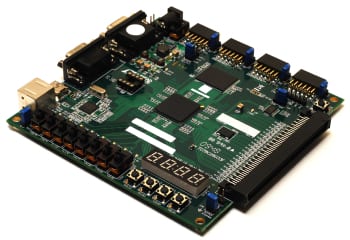
Printed Circuit Boards by KT Technical Solutions.
The requirements for circuit board design shift significantly depending on the domain of the unmanned system:
Across all domains, custom PCB design may be required for advanced applications such as sensor fusion, edge processing, and AI-driven autonomy, and factors such as tightly constrained size, weight, and power (SWaP) envelopes.
While marginal PCB circuit design in a consumer device results in an inconvenience, for unmanned systems and robotics it may lead to the total loss of the vehicle, payload, or mission-critical data. Signal integrity issues can corrupt navigation inputs, while inadequate grounding can impair radio performance. Thermal miscalculations can reduce processor lifespan or trigger in-flight resets.
Professional unmanned system integrators treat printed circuit design as a core systems engineering function. Stack-up definition, impedance control, EMI containment, and thermal paths are designed in from first principles.
Material selection determines electrical performance, mechanical durability, and thermal characteristics. While FR-4 remains the industry baseline, unmanned systems often require specialized substrates, such as:
Copper thickness influences current-carrying capacity and thermal performance. High-current motor controllers and power distribution boards frequently employ heavier copper layers to reduce resistive losses and temperature rise. Trace width, spacing, and geometry are engineered based on current load, impedance targets, and creepage requirements.
Rigid PCBs dominate processing and power subsystems. Flexible circuits allow dynamic routing in gimbals, articulated arms, or space-constrained fuselages. Rigid-flex constructions combine both, reducing connectors and harness complexity while improving reliability under vibration. In aerospace-grade systems, these solutions significantly reduce weight while enhancing interconnect robustness.

Rigid flex PCB manufacturing by San Francisco Circuits.
HDI boards use fine traces, microvias, and sequential lamination to support high pin-count processors. These are increasingly common in AI-enabled edge computing modules. Modern platforms also depend on high-speed digital buses and video streams, where PCB board design ensures predictable signal propagation through differential pair routing and length matching.
Unmanned systems are fundamentally constrained by SWaP. PCB layout design directly influences component density and harness requirements. Integrating multiple subsystems onto fewer boards reduces weight, while efficient power conversion extends operational endurance.
High-performance processors and RF amplifiers generate concentrated heat. Without effective thermal design, performance degrades. Strategies include:
Electromagnetic compatibility is a persistent challenge in compact platforms. Effective techniques include dedicated ground planes, controlled return paths, shielded compartments, and careful filtering at I/O boundaries. Proper design is often the difference between a compliant system and one that fails certification.
The PCB design process progresses from schematic capture to layout, stack-up definition, and simulation. Fabrication involves photolithographic patterning, chemical etching, and precise drilling (including microvias for HDI). Assembly typically uses surface-mount technology (SMT), verified by Automated Optical Inspection (AOI) and X-ray inspection to minimize latent defects.
Professional unmanned systems align with recognized industry and military standards, including:
Hardware-level assurance is vital for many unmanned systems applications, such as those undertaking military and security missions or handling confidential data. PCB design may incorporate secure elements, hardware roots of trust, and anti-tamper techniques such as tamper-detection meshes or epoxy encapsulation. Preventing counterfeit components requires strict approved vendor lists and full material traceability.
As autonomy and edge computing demands grow, PCB design continues to evolve. Higher layer counts and finer geometries support increasing processing density, while new materials expand performance in extreme environments, including high-altitude and near-space missions.


 Searching Companies & Products

 Subscribe to the Weekly eBrief
The latest engineering and technical developments straight to your inbox - join thousands of engineers who receive it.
Subscribe to the Weekly eBrief
The latest engineering and technical developments straight to your inbox - join thousands of engineers who receive it.