


Suppliers
Add your company
SKYTRAC
UAV, UAS, and UAM Satellite Communications – BVLOS and C2 Satcom Terminals and Mission Servers

Platinum Partner

uAvionix Corporation
Certified UAV Communications, Navigation, Control, Surveillance, and Combat ID Solutions

Gold Partner


Showcase your capabilities
If you design, build or supply Remote ID, create a profile to showcase your capabilities on this page
Products
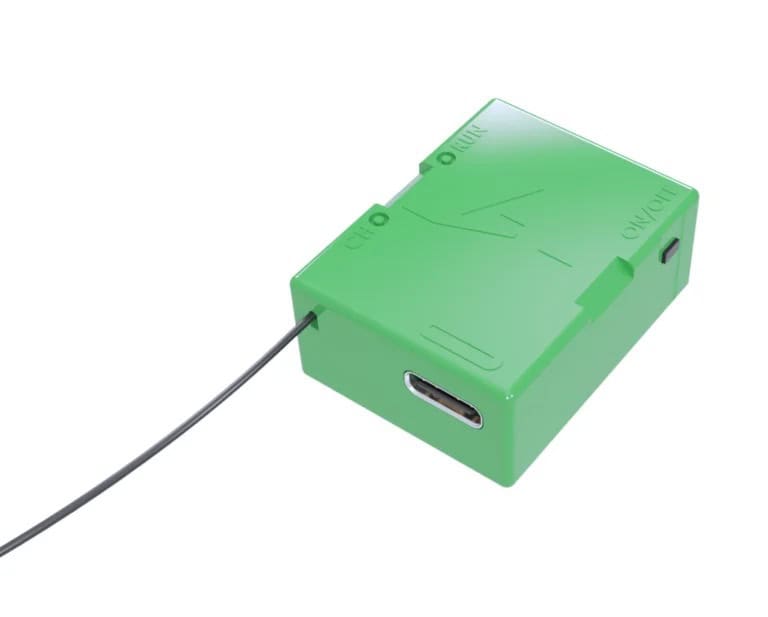


Remote ID & Drone Identification

Drone & UAV Identification
Remote Identification, or Remote ID, is a system that allows drones to broadcast their position and identification location while in flight. This information can be used by law enforcement or other agencies to track drones and to locate the pilot of an aircraft that may be flying in an unsafe manner or in a restricted area such as an airport.

FAA Remote ID

idME (remoteID) – Drone Identification and Tracking Module by Aerobits
The United States Federal Aviation Administration (FAA) has mandated that all drones weighing 0.55 lbs (0.25 kg) or more will have to be equipped with remote identification capabilities, as part of their efforts to further integrate drones into the NAS (National Airspace System).
In order to comply with the regulations, drone pilots and operators can either operate drones that have been manufactured with built-in Remote ID, retrofit their drones with an approved Remote ID module, or fly at FAA-recognized identification areas (FRIAs) sponsored by community-based organizations or educational institutions where Remote ID broadcasting will not be required.
Remote ID Modules
Drone Remote ID modules must broadcast via a radio-frequency method such as Bluetooth or Wi-Fi. The information that must be contained in the broadcast messages includes a unique drone ID number, the latitude, longitude, geometric altitude, and velocity of the drone, and an indication of the position of the drone’s ground control station or take-off point.
Remote identification capabilities are also being tested by other jurisdictions and UTM (unmanned traffic management) networks around the world. ASTM International has released F3411-19 – Standard Specification for Remote ID & Tracking, which contains suggested standards for performance requirements, message formats and transmission methods for remote identification.


