


Suppliers
Add your company
Wolf Advanced Technology
Rugged Computing and Video I/O Modules: 6U & 3U VPX, XMC, VNX+, and other Small Form Factors and Custom Solutions

Platinum Partner

Honeywell Aerospace
BVLOS Solutions for UAS & UAM: Fuel Cells, Radar, Navigation Sensors, Flight Control & SATCOM

Platinum Partner

Trillium Engineering
UAV Gimbal Payloads - EO & EO/IR Drone Camera Gimbals for Tactical UAS

Platinum Partner

SKYTRAC
UAV, UAS, and UAM Satellite Communications – BVLOS and C2 Satcom Terminals and Mission Servers

Platinum Partner

Triad RF Systems
Integrated Radio Systems, RF Power Amplifiers, Bi-Directional Amplifiers & Consultancy Services for UAV & Unmanned Systems

Platinum Partner
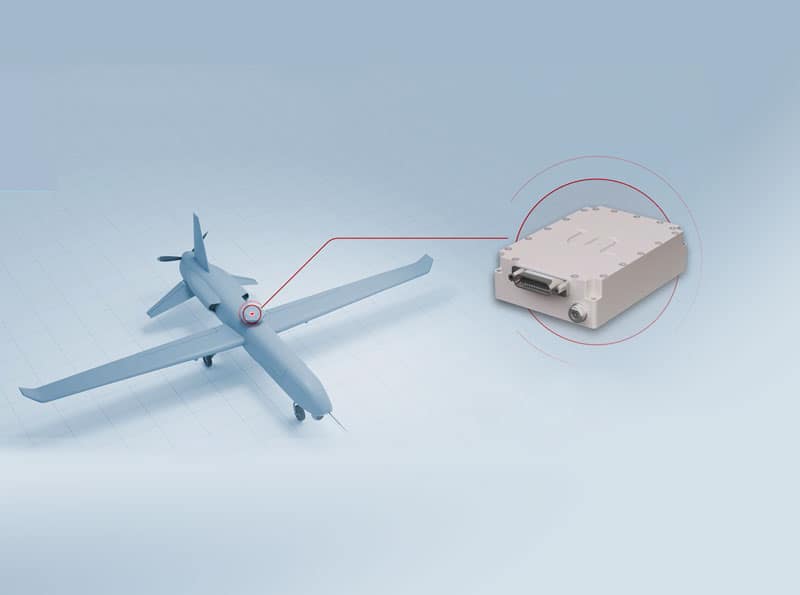
TUALCOM
Anti-Jam GPS-GNSS Devices, Tactical Data Links, Telemetry Systems, Electronic Warfare Equipment & Flight Termination Systems

Gold Partner

Maris-Tech
Edge AI Video Processing & Streaming Solutions Providing Real-Time Situational Awareness for Mission-Critical UAVs & Unmanned Systems

Gold Partner
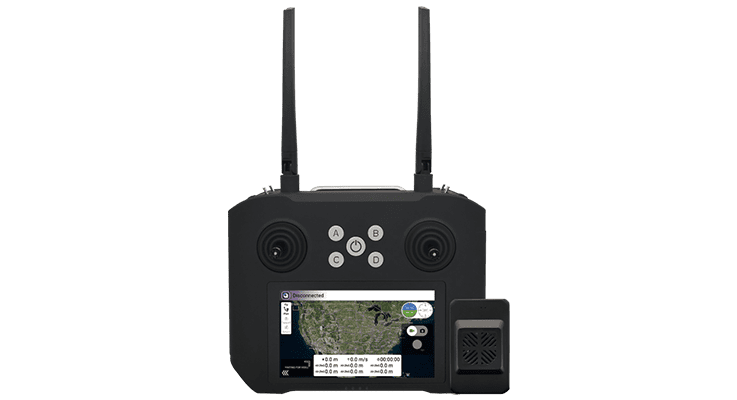
Taisync Technology
Wireless Datalink Solutions for Unmanned Vehicles & Robotic Platforms

Gold Partner

Videosoft Global
Ultra-Low-Bandwidth Real-Time Video Streaming Solutions for UAVs, Unmanned & Robotic Systems

Gold Partner

SubC Imaging
Cutting-Edge Underwater Imaging Systems & Remote Operations Solutions For Subsea Inspection

Gold Partner

Blitz Technology
UAV Gimbal Payloads & Video Processing Solutions – Multi-Sensor EO/IR Drone Camera Solutions

Gold Partner

LiveU
UAS Video Streaming Technology: Secure, Low-Latency, Live Video Streaming and Transmission Solutions

Gold Partner

Neousys Technology
Industrial-Grade Embedded Computer Systems for AI Edge Computing & Machine Learning

Gold Partner

Meteksan Defense
UAV Components: SAR, Radar Altimeter, Data Links, Telemetry, GNSS Products & C-UAS | Tactical USVs

Gold Partner


Doodle Labs
Mesh Radio, WiFi Transceivers & Wireless Mesh Network Technology for Drones, UAVs, UGVs & Robotics

Gold Partner

Sightline Intelligence
Onboard Video Processing Software and Hardware for Unmanned Systems

Gold Partner

Eroot Electronics
Professional UAV Components & Sensors: Drone Flight Controllers, GNSS Modules, Telemetry Solutions

Silver Partner

Apella Solutions
UAV Antennas, Tracking & Video Solutions for Mission-Critical Connectivity, Real-Time Visibility, & Robust Communications

Silver Partner

Vizgard
Edge-Based Visual AI Software Platform for Defence & Security Camera Automation

Silver Partner

Chess Dynamics
Electro-Optical Surveillance and Video Processing for Unmanned Systems & Counter-Drone Applications

Silver Partner

Simpulse
SDR Technology, UAV Data Links & Tracking Antennas for Long-Range Communications

Silver Partner

EIZO Rugged Solutions
High-Performance Video Graphics, GPGPU, AI/ML Processing & Display Solutions for C5ISR Applications

Silver Partner

Radionor Communications AS
Wireless Radio Communications, Tactical Data Links & Radio Transceivers for Unmanned Systems

Silver Partner


Showcase your capabilities
If you design, build or supply Video Transmission, create a profile to showcase your capabilities on this page
Products






Drone Video Transmission

Introduction to Drone Video Transmission
Drone video transmitters relay real-time visual information from onboard payload cameras to the Ground Control Station (GCS) or command center, ranging from high-definition (HD) electro-optical (EO) feeds to infrared (IR) imagery. This live visual link is fundamental, enabling immediate situational awareness, precise navigation, effective payload management, and is the basis for operational decision making in both commercial and industrial unmanned applications.

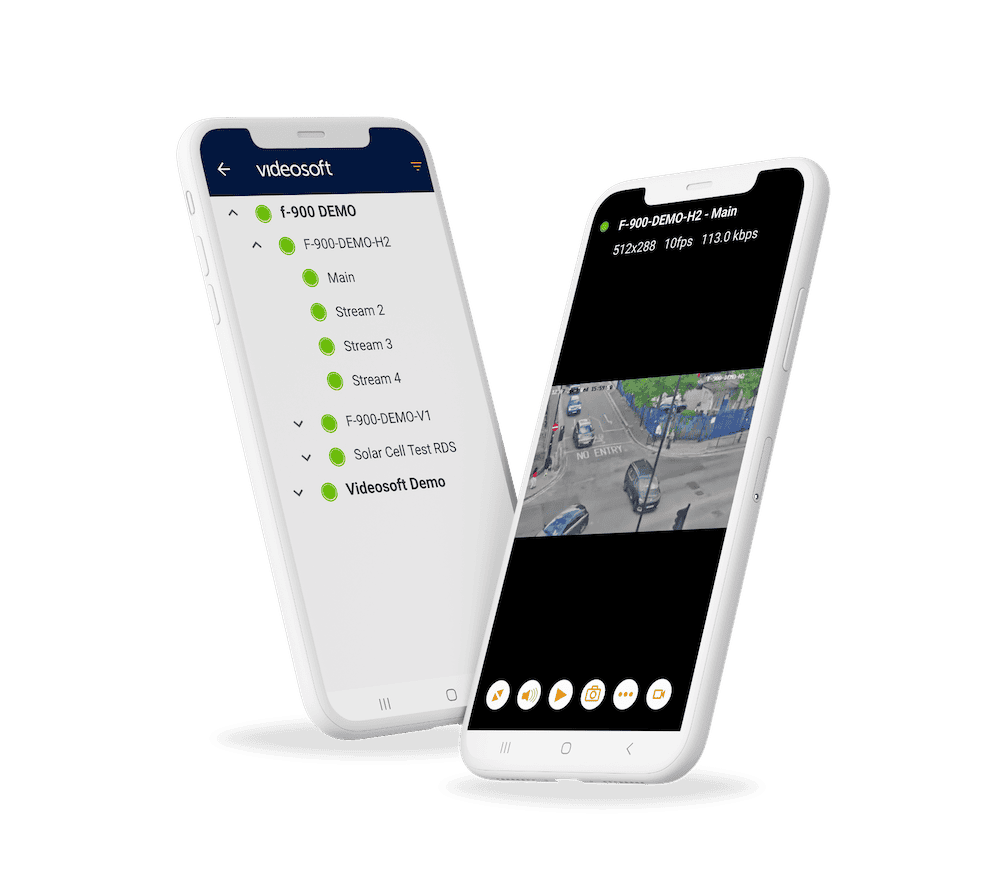
FireBird™ F-100 LTE Video Encoder, a compact video encoder designed for real-time video transmission, from Videosoft Global
Regardless of whether they are integrated into compact inspection drones, long-endurance surveillance Unmanned Aerial Vehicles (UAVs), or tactical military platforms, the drone video transmitter must ensure that mission-critical visual data is relayed without interruption, delay, or compromise. In contemporary unmanned system architectures, this technology operates as part of a sophisticated communication ecosystem alongside separate telemetry, Command-and-Control (C2), and high-speed data downlink systems.
The Role of Real-Time Drone Video Transmission
Reliable real-time drone video transmission elevates UAVs from automated data collectors to active participants in dynamic decision loops.
- Situational Awareness: In Intelligence, Surveillance, and Reconnaissance (ISR) missions, live imagery allows operators to instantly identify, track, and geo-locate targets.
- Payload Monitoring: For industrial and scientific operations, such as infrastructure inspection or marine surveys, the video feed provides critical visual validation of data collected by other sensors (e.g., LiDAR, thermography).
- Mission Data Relay: The captured video data is frequently recorded and time-stamped using onboard or ground-based video recorders for comprehensive post-mission analysis. It can also be fused with other telemetry inputs for advanced applications such as 3D photogrammetry, change detection, or automated object recognition.
Core Principles of Drone Video Transmission
The performance of any video link is governed by a set of foundational technical trade-offs that engineers must manage.
Analog vs. Digital Systems
| Analog Video Transmitters | Digital Video Transmitters | |
| Signal Type | Uncompressed, continuous wave | Compressed, coded data stream |
| Latency | Near-zero (ideal for FPV) | Low to moderate (improving) |
| Image Quality | Susceptible to degradation and noise | Superior resolution and reliability (HD/4K) |
| Security | None (easily intercepted) | Integrated encryption (AES) |
| Dominant Use | FPV racing, hobby, short-range inspection | Professional, military, long-range platforms |
The digital video transmitter for drone operations now dominates the professional sector. By converting imagery into a compressed data stream using modern codecs, these systems offer superior image quality, higher reliability, and essential encryption capabilities, overcoming the interference and resolution limits of older analog systems.
Line-of-Sight (LOS) and Beyond-Line-of-Sight (BLOS)
The stability of a drone video transmission link depends heavily on radio line-of-sight.
-

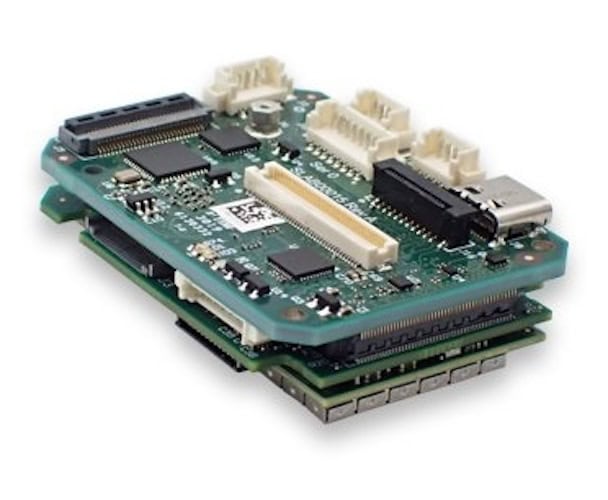
Condor NVB2000xX, an AI-accelerated XMC GPU module for embedded UAV systems, from EIZO Rugged Solutions
LOS Systems: These typically use higher frequency bands (e.g., 5.8 GHz, C-band) and directional antennas to maintain a clear, low-latency link over distances often spanning several kilometers.
- BLOS Systems: Essential for strategic and long-endurance UAVs, BLOS operations extend the link via aerial or ground-based relays, sophisticated mesh networks, or high-throughput satellite communications (Satcom, e.g., Ku/Ka-band). Modern hybrid architectures often combine RF LOS transmitters for near-field monitoring with LTE, 5G, or Satcom uplinks for true global coverage.
Bandwidth, Latency, and Compression
Engineers must carefully balance these three interdependent parameters against available radio spectrum, transmitter power, and specific mission profiles:
- Bandwidth: Directly dictates the video resolution and maximum achievable frame rate.
- Compression: High compression (e.g., using H.265) reduces the required bandwidth but inherently increases the processing time, leading to higher latency.
- Latency: For defense and surveillance UAVs, deterministic, low latency is critical. Operators must typically receive imagery in under 200 milliseconds to maintain effective, real-time control and accurate target tracking.
Key Components of Drone Video Transmitters
The robustness of a drone digital video transmitter relies on the integrated performance of its core subsystems.
Radio Frequency (RF) Subsystems
RF components define the transmission performance and operating range. Common bands include 2.4 GHz and 5.8 GHz for smaller platforms, while C-band (4-8 GHz), X-band (8-12 GHz), or Ku-band (12-18 GHz) are used for long-range and defense-grade platforms.
Many professional systems use Coded Orthogonal Frequency-Division Multiplexing (COFDM). COFDM is highly resilient against multipath interference (a common challenge in urban or mountainous terrain), by dividing the data stream across many closely-spaced subcarriers.
Antennas used in drone video transmission include:
- Omnidirectional antennas: Offer simplicity and portability for close-range missions.
- Directional (high-gain patch or dish) antennas: Maximize range and signal integrity.
- MIMO (Multi-Input, Multi-Output) arrays: Widely used to enhance link robustness by dynamically selecting the strongest signal path.
Encoding and Compression
Video encoders are paramount for efficient use of bandwidth. Most modern UAVs rely on the H.264 or H.265 (HEVC) codecs to compress full-HD and 4K video feeds. An emerging trend is the use of integrated video processors which perform onboard analytics (such as object detection and motion tracking) before encoding. This significantly reduces the necessary data load, allowing the system to transmit only relevant segments or metadata instead of full frames, which conserves bandwidth for critical C2 data.
Receiver Systems
The Ground Station receiver decodes and displays the video stream. Diversity reception and real-time error correction are employed to ensure continuity of the video feed under challenging RF conditions.
Received video is integrated directly into mission control software and situational awareness displays, facilitating synchronized decision-making.
Drone Video Transmission Methods
Digital Video Transmitters
These systems provide the necessary high-definition imagery with integrated security and resilience. They typically use IP-based transmission protocols like RTP/RTSP or MPEG-TS, allowing for seamless integration with networked ground control architectures and cloud data platforms.
Mesh Networking and Relay
Mesh networking allows multiple UAVs to operate as a coordinated network, dynamically sharing and relaying video data. This architecture extends overall system range and enables cooperative surveillance by having each drone function as both a transmitter and an ad-hoc relay node.
Beyond 4G/LTE/5G and Satcom
For operations extending past traditional ground coverage, integrating LTE/5G cellular or dedicated satellite systems provides the necessary backhaul connectivity. This enables real-time video streaming to remote command centers globally, forming part of an extended Video Data Link (VDL) architecture that integrates airborne transmission, backhaul connectivity, and ground reception into a unified transport layer. The advent of 5G-enabled UAV communications offers ultra-low-latency, high-throughput links, which are ideal for real-time 4K streaming and secure, cloud-based control.
Emerging Trends in Drone Video Transmission
AI Integration and Edge Processing
Edge-based Artificial Intelligence (AI) is fundamentally transforming drone video transmission. By performing computationally intensive analytics directly on the UAV, the system can automate target recognition and transmit only the resulting metadata or relevant video clips. This significantly cuts data requirements while automating essential mission tasks.
Software-Defined Radios (SDR) and Adaptive Modulation
Software-Defined Radios (SDRs) offer a reconfigurable transmission architecture, allowing modulation schemes, frequencies, and encryption protocols to be updated via software, even in the field. Adaptive modulation further enhances this capability by instantaneously optimizing throughput and reliability based on current link conditions, maximizing efficiency across dynamic and varying mission environments.


