
C-UAS Technology Manufacturers & Suppliers
Add your company
D-Fend Solutions
RF-Cyber based Counter-UAS Solutions for Drone Threat Detection & Mitigation

Platinum Partner

Trakka Systems
Multi-Sensor Imaging Gimbals, Searchlights and VMS Software for Air, Land & Maritime Platforms

Platinum Partner

Honeywell Aerospace
BVLOS Solutions for UAS & UAM: Fuel Cells, Radar, Navigation Sensors, Flight Control & SATCOM

Platinum Partner


Areté
Cutting-Edge Unmanned Systems-based Sensing Solutions & Counter-UAS Systems for Military & Defense Forces

Gold Partner

Alpine Eagle
Revolutionary Airborne Counter-UAS Solution That Utilizes Swarming UAVs & Active Radar Sensors

Gold Partner

ParaZero Technologies
Counter-UAS Technology, Precision Payload Delivery Systems, and Drone Parachute Safety Systems

Gold Partner

Meteksan Defense
UAV Components: SAR, Radar Altimeter, Data Links, Telemetry, GNSS Products & C-UAS | Tactical USVs

Gold Partner

The Tactien Group
Specialist Advisory & Consulting Services Focusing on UAS & Counter-UAS Advancement

Silver Partner

Nearthlab
AI-Powered Autonomous Drone Solutions for Public Safety, Defense, and Industrial Inspection

Silver Partner

Arctic Horizons
Cutting-Edge Unmanned Aerial Systems & Counter-Drone Technologies for Government & Defense Applications

Silver Partner

Vizgard
Edge-Based Visual AI Software Platform for Defence & Security Camera Automation

Silver Partner

Chess Dynamics
Electro-Optical Surveillance and Video Processing for Unmanned Systems & Counter-Drone Applications

Silver Partner



Showcase your capabilities
If you design, build or supply Counter-UAS, create a profile to showcase your capabilities on this page
C-UAS Products & Systems


Counter-UAS Technology: The Definitive Guide to Anti-Drone Systems, C-UAS Solutions, and Military Countermeasures

The rapid proliferation of unmanned aerial vehicles (UAVs), or drones, has led to significant advancements in anti-drone systems and counter-UAS (C-UAS) technology. These solutions are essential for ensuring airspace security, protecting critical infrastructure, and mitigating threats posed by unauthorized drones.
Explore the principles, technologies, and applications of anti-drone and C-UAS systems, highlighting their vital role in modern security.
What is an Anti-Drone System?
An anti-drone system refers to a collection of tools, devices, and strategies designed to detect, track, and neutralize unauthorized or malicious drones. These systems are crucial in addressing the risks posed by drones in sensitive areas such as airports, government buildings, military installations, and private properties.
How does Anti-Drone Technology Work?
The effectiveness of anti-drone technology lies in its ability to identify, track, and neutralize drones through a series of integrated components, including:
Drone detection
Utilizing tools like anti-drone radar, optical sensors, and RF drone detection, these systems identify unauthorized UAVs entering restricted zones. Drone detection technologies ensure early identification to allow swift response.
Drone tracking
Advanced drone tracking technologies combine GPS data, thermal imaging, and radio frequency analysis to monitor the trajectory and behavior of a detected drone.
Neutralization
Once identified, anti-drone systems employ neutralization methods, such as signal jamming, drone signal jammers, anti-drone nets, and directed energy weapons, to disable the threat.

Counter UAS Technology by Meteksan
Types of Counter-UAS Systems
Modern C-UAS systems integrate various technologies to effectively counter drone threats. They can be broadly classified into detection and neutralization categories.
Drone detection and tracking systems
Detection systems form the first line of defense in counter-UAS solutions. They use technologies such as:
- Radar systems: Detect and track drones over long distances using electromagnetic signals.
- Optical sensors: Provide visual confirmation of drone activity.
- Drone tracking Systems: Monitor drone movements in real time.
Neutralization systems
Neutralization systems incapacitate drones once identified. Methods include:
- Signal Jammers: Disrupt communication between the drone and its operator.
- Anti-Drone Guns: Handheld devices capable of disabling drones by targeting their RF systems.
- Anti-Drone Nets: Physically capture and immobilize drones.
Applications of Anti-Drone & Counter-UAV Technology
The application of anti-drone systems spans a wide range of sectors, including:

Anti Drone System EnforceAir2 Deployment Bundles by D-Fend Solutions
Military and defense
Military operations rely on anti-drone weapons and counter-UAV systems to neutralize hostile drones used for reconnaissance or as armed threats. C-UAS systems including solutions like drone guns are critical for battlefield operations.
Maritime defense
Anti-drone radar and C-UAS systems protect ships and ports from unauthorized drone activities, which could jeopardize maritime operations.
Critical infrastructure protection
Airports, power plants, and government buildings employ counter-drone systems to ensure operational safety and security.
Event security
High-profile events, such as sports games, concerts, and political gatherings, use drone detection and neutralization systems to prevent drone intrusions.
Key Technologies in Counter-UAS Systems
The success of counter-UAS technology depends on its ability to combine multiple detection and neutralization methods. Key technologies include:

Counter Drone Falconet by Arctic Horizons
Radar-based detection
Anti-drone radar is a critical component of any C-UAS system. It offers wide-area surveillance and early detection of UAVs. Radar works by sending out a radio frequency signal and measuring that signal’s echo.
RF signal detection
Radio frequency scanners detect and analyze signals emitted by drones and their operators, providing a non-invasive method of identification.
Optical sensors
Cameras and optical sensors are used to visually confirm the presence of drones. These tools are especially useful in urban environments where radar signals may suffer interference.
Signal jamming
Signal jamming is one of the most effective neutralization techniques. It works by disrupting the communication link between the drone and its operator, forcing the UAV to return to its base or land immediately. Common tools include drone signal jammers and handheld anti-drone guns.
Physical capture
In some scenarios, physically capturing a drone using anti-drone nets can be more effective, particularly when the drone carries sensitive or hazardous payloads.
Emerging Trends in Anti-Drone Technology
The field of anti-drone technology is constantly evolving to address new threats. Key trends include:
- AI-powered detection systems: Artificial intelligence is enhancing drone detection capabilities by enabling systems to distinguish between UAVs and other flying objects.
- C-UAS systems for urban environments: Urban areas pose unique challenges for drone detection due to signal interference and blocking by buildings. Advanced C-UAS systems are being designed to operate effectively in such conditions.
- Portable anti-drone weapons: Compact and easy-to-use solutions like anti-drone guns are gaining popularity for their mobility and effectiveness.
Challenges in Countering Drones
While counter-drone technology has made significant advancements, challenges remain. These include day-to-day challenges such as false positives where systems misidentify birds or other flying objects as drones. And broader-ranging issues such as regulatory constraints on the use of signal jammers and other neutralization methods which may be restricted in certain jurisdictions.
There is also the technology challenge itself. As drones become more advanced and more intelligent, so must the tools designed to counter them.
Why Anti-Drone Technology is Essential for Modern Security
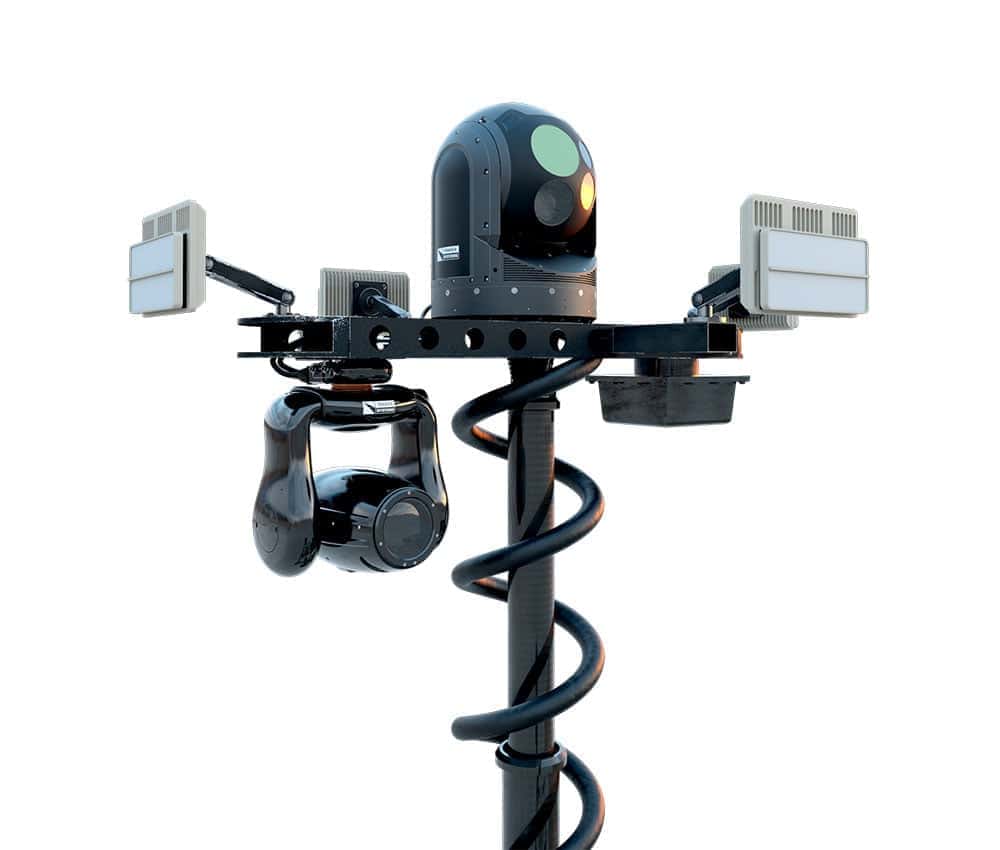
CUAS System TIPS-C by Trakka Systems
The growing accessibility and affordability of drones have made them a valuable tool for both legitimate and malicious purposes. Unauthorized drones can pose serious risks, including:
- Espionage: Drones can be used for reconnaissance and data collection.
- Terrorism: Armed drones present a significant threat to public safety.
- Disruption: Drones can interfere with air traffic and disrupt critical operations.
By investing in anti-drone systems and counter-UAS technology, organizations can mitigate these risks effectively.
As drones become more prevalent, the need for robust anti-drone and counter-UAS systems grows increasingly urgent. From drone detection and tracking to innovative neutralization methods like signal jammers and anti-drone weapons, these technologies are essential for maintaining airspace security and protecting against evolving threats.
Whether for military defense, critical infrastructure protection, or event security, C-UAS systems offer versatile solutions to counter drone-related risks. By staying ahead of technological advancements, security professionals can ensure that our skies remain safe and secure.
Frequently Asked Questions
What is counter-drone technology?
Counter drone technology is used to deal with hostile UAVs, and may encompass a range of detection, identification, tracking and interception methods.
How does anti-drone technology work?
Anti-drone technology encompasses a wide range of countermeasures that detect, identify, track, disable or destroy UAVs. Often multiple sensors and devices will be integrated into a single anti-drone system.
How can drones be detected in the sky?
Flying drones can be detected by scanning for the RF signals used at certain frequencies for communications. Cameras can also be used to detect their visual and heat signatures, and acoustic signatures can be picked up and compared to a library of known UAV recordings.
How do you disable a drone?
Drones can be disabled via “hard kill” methods, using traditional munitions to cripple or destroy the drone. Electronic countermeasures can also be used to disrupt RF or GNSS satellite communications broadcast and received by the drone.
How does a drone jammer work?
A drone jammer generates large amounts of electromagnetic interference that will disrupt communications or navigation signals used by the drone.
How do anti drone guns work?
Anti drone guns are handheld devices that interfere with RF communications, often disrupting multiple RF bands simultaneously. They may also disrupt GNSS signals, including GPS and GLONASS.


